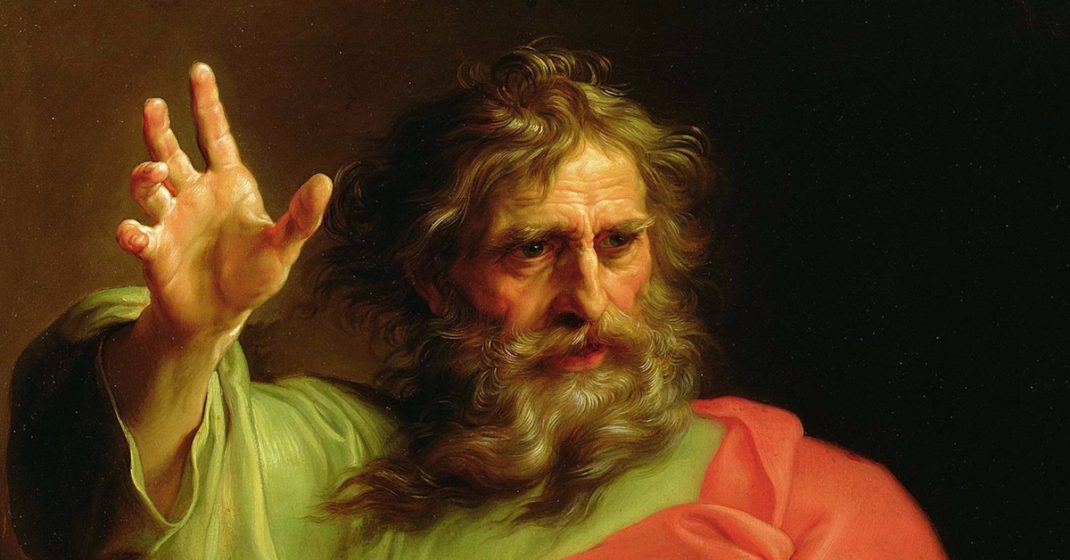
In Christianity, there are few people who have had a more lasting effect than Paul. Paul, or his followers, wrote more than half of the books in the New Testament and have profoundly shaped how we have come to view Christianity. The problem, however, is the earlier you go back in time, the more you can see fundamental issues people had with Paul and his teachings. These issues, with Paul, can even be traced back to Peter, James, and John, who are the Apostles Jesus personally chose.
Paul
Since Paul is such an influential person in Christianity, then any kind of critical examination of him is going to feel like an examination of Christianity itself. This is not my intent. It should, however, be clear that well-intentioned people have left their mark all throughout history and changed things according to their own understanding. This should especially be clear in Mormonism, where we can easily see Joseph Smith teaching Christianity according to his own views and even developing a system of religion with complicated rites and ordinances. There is no reason to think Joseph, or even Paul, were unique in this regard.
To ensure we are all on the same page, I do want to very briefly go over Paul’s history. Paul was not one of the original twelve apostles, that Jesus personally chose. He was actually a Pharisee and a staunch opponent of Christianity who felt it was his divine mission to eradicate the young movement. Approximately 10 years after the death of Jesus, Paul was travelling on the road towards Damascus and wrote that Jesus appeared to him and asked Paul why he was persecuting Christianity so much. After this transformative experience, Paul is converted to Christianity and declares himself an Apostle of Jesus and then goes forth boldly to start teaching the gospel to the gentiles.
This sounds very nice, however when we actually begin to look at Paul’s teachings directly, we can see several key differences between the gospel he taught, and that of Jesus, Peter, James, or even John. These differences have been smoothed over by apologists, just like they do in Mormonism. However, the differences are still there and still very alarming when you discover them. I will analyze the differences between Paul and Jesus, at a future time. However, it is important to know that Paul’s version of the gospel doesn’t directly match the gospel that Jesus taught in the New Testament or even the Book of Mormon.
The purpose of this analysis though is to simply say that maybe we shouldn’t lean so heavily on Paul today, since the original church of Jesus seemed to spot red flags everywhere with Paul. This is not to say that we can’t learn from Paul or use him as an example of a faithful believer. Which is the same with Joseph Smith and Mormonism. This is just to say that maybe Paul wasn’t the apostle that he claimed to be. And maybe the gospel that he taught was just a well-intentioned perversion of the truth. Which is exactly what we have seen time and time again, with many people all throughout Christianity.
Considerations
Trance
The first red flag is in Acts 22. In this chapter, Paul is back in Jerusalem and was arrested for causing a disturbance. Paul was given a chance to speak to the people and try to calm them down. In order to do so, he very briefly recounted his conversion story. In that story however, he speaks of a crucial detail that is very easy to overlook.
In verses 17 and 18, Paul describes how after his vision, he returned to Jerusalem and was praying in the Temple to know what to do next. The next logical step would be to visit the 12 apostles, and certainly James the leader of the church, in order to get more direction. However, he remarks that while praying in the temple, he had a vision and again saw the same person which appeared to him on the road, which he said was Jesus. This spiritual being however, told him to immediately leave the temple because the apostles wouldn’t believe his story. Paul then immediately left and went far away preaching his version of the gospel to the gentiles.
When I had returned to Jerusalem and was praying in the temple, I fell into a trance and saw him saying to me, ‘Make haste and get out of Jerusalem quickly, because they will not accept your testimony about me.’ … And he said to me, ‘Go, for I will send you far away to the Gentiles.’
Acts 22:17-21 ESV
It is important to keep in mind, that this is supposedly the same Jesus that appeared to the Apostles after his resurrection, and the same Jesus that visited them repeatedly over the course of 40 days. There is no reason to imagine the Apostles wouldn’t have believed Jesus if he appeared to them also. This would have actually been an incredibly easy way for the Apostles to have known Paul was called by God directly.
However, instead this spiritual figure tells Paul to flee from the Apostles and go far away. Even if Jesus didn’t want to appear and tell them directly, then couldn’t they have prayed about it and asked God? Are we to assume, that God wouldn’t have told the Apostles, or they wouldn’t have believed the answer from God? Paul’s entire experience, and conversion story, is predicated on the concept of not involving the Apostles that Jesus personally chose. This doesn’t really make much sense when you think about it. Especially in relation to organized religion where the hierarchy is incredibly important. Supposedly today, we can’t violate the religious hierarchy, however that is exactly what Paul did.
Reputed Leaders
The second red flag seems to have taken place 14 years after Paul’s first attempt to go to Jerusalem. In Galatians 2, Paul describes a meeting with the Apostles which seems to have been for reconciliation purposes. In this meeting though, Paul says some incredibly interesting things concerning the Apostles, that Jesus personally chose.
In several places in that chapter Paul refers to the apostles as “reputed” leaders of the church. This is honestly such a strange word to use for the Apostles themselves and shows that he didn’t really see them as leaders, but just as a necessary obstacle. That particular word, or manner of speaking, would only be used if someone didn’t accept the fact personally but wanted to illustrate that others did.
We might think that is exclusive to a specific translation, however that is not the case. If we look at other translations, then we can see very similar wording as well. Some translations describe the apostles as “those esteemed as leaders”, “those considered to be leaders”, or “those recognized as leaders”. In none of the translations though does it describe them as the actual leaders of Christ’s gospel.
Another strange aspect of this encounter is that Paul also describes how the teachings of the Apostles didn’t even matter, to him. Since his message was not contingent on them or their thoughts. Yes, I understand that he felt his message was of God. However, him saying this is effectively the same as him going rogue. He is admitting that the Apostles thoughts, opinions, and teachings didn’t matter to him or his message. Paul is also admitting that he is teaching a different gospel than the Apostles were. This is incredibly concerning.
I went in response to a revelation, and in a private meeting with the reputed leaders … Now those who were reputed to be important added nothing to my message. (What sort of people they were makes no difference to me …) … So when James, [Peter] and John (who were reputed to be leaders) …
Galatians 2:2-9 ISV
Another interesting point in this same chapter, is that in verse 11, Paul describes a confrontation he had with Peter where he openly opposed him and described his actions as hypocritical. This may be the case and valid, I wasn’t there. However, it does further show Paul’s complete lack of respect and utter distain for the Apostles and particularly Peter. Peter himself was called, by Jesus, to preach to the Gentiles. However, it seems Paul didn’t feel this was good enough and referred to himself as the apostle to the Gentiles in several places like Romans 11. If Peter was the Apostle to the Gentiles, according to Jesus, then why did God need Paul at all?
But when [Peter] came to Antioch, I opposed him to his face, because he was clearly wrong.
Galatians 2:11 ISV
Revelation
The third red flag is found in Galatians 1. In this chapter, Paul is just beginning his letter to the Galatians and starts by giving some background information. In this introduction, he gives a brief overview of the gospel that he is teaching and tells the Galatians to not depart from this gospel because there are others who were teaching a different gospel. Paul then tells them next where he obtained this gospel, which seemed to be so different from the other gospels that were being taught to the Galatians.
Starting in verse 11, Paul describes that he didn’t learn this gospel from any earthly person, but received it from a spiritual messenger, which he said was Jesus. This of course, sounds quite nice. However, we still are not even sure if this messenger was Jesus or some other being that claimed to be Jesus. I don’t think many would doubt that Satan could appear to Paul and claim to be Jesus. In addition, Paul clearly mentions that the gospel that he was teaching was not taught to him by the Apostles, who walked and talked with Jesus. It was strictly something he learned from an otherworldly source.
For I want you to know, brothers, that the gospel that was proclaimed by me is not of human origin. For I did not receive it from a man, nor was I taught it, but it was revealed to me by Jesus the Messiah.
Galatians 1:11-12 ISV
Some may think that Paul could have learned it from the Apostles, but just called it of God. This is true. Except Paul clearly mentions, in verse 17, that this was not the case. Paul did not speak with the Apostles or go to Jerusalem to learn their thoughts on the subject. He actually just took what he had learned from the spiritual being and started to teach that message. In Acts 22, Paul even mentioned that this same spiritual messenger asked him not to tell the Apostles of the vision as they wouldn’t believe it was of God.
I did not confer with another human being at any time, nor did I go up to Jerusalem to see those who were apostles before me.
Galatians 1:16-17 ISV
Why would Jesus work so hard with his Apostles directly, during his ministry, and then just ignore the whole thing to call Paul as an Apostle? According to the Bible, and other sources, there were doctrinal differences between Paul and the Apostles. This should never have been the case if they were teaching the same message.
Law
The fourth red flag is found in Acts 21 and Romans 7, which show that the gospel which Paul was teaching was not the same gospel that the rest of the Apostles were teaching. Yes, there was some overlap. However, it seems that the two gospels differed in fundamental ways. It would seem then that if there was a disagreement about this, then it would make sense to defer to the Apostles who walked and talked with Jesus personally. Paul, however, would disagree. It also is interesting to consider that we only have these written records so was it possible that the disagree was larger than we know?
In Acts 21, Paul again goes up to Jerusalem and meets with James and the rest of the leaders of the church. James remarks that the Jewish converts were reporting that Paul was teaching that the Law of Moses was completely done away with and that the Jewish converts were now under no obligation to follow any of the law. This is the same message we hear today. James however remarked that this was not true. The Jewish converts were still to follow the Law of Moses. The Gentile converts however were to follow a small set of very simple rules, which is also reiterated in Acts 15. These simple rules were:
- Don’t eat food sacrificed to idols
- Don’t eat raw meat, or drink blood
- Don’t eat anything strangled
- Avoid sexual immorality
They have been told about you—that you teach all the Jews living among the gentiles to forsake the Law of Moses … Then everyone will know that there is nothing in what they have been told about you, but that you are carefully observing and keeping the Law. As for the gentiles who have become believers, we have sent a letter with our decision that they should keep away from food that has been sacrificed to idols, from blood, from anything strangled, and from sexual immorality.
Acts 21:21-25 ISV
Paul however was again teaching a totally different gospel for both Jew and Gentile. In Paul’s mind the Law of Moses was fulfilled, which to him meant, completely removed. In Romans 7, which was addressed to both Jews and Gentiles, Paul mentions that through Christ the Law was removed, so they were no longer under any obligation to follow it. This may make sense for the Gentiles, however it was directly taught against by James and the rest of the church, for the Jews.
But now we have been released from the Law by dying to what enslaved us, so that we may serve in the new life of the Spirit, not under the old writings.
Romans 7:6
In addition to that, we can see that Paul, in 1 Corinthians 8, and many other places, taught that eating foods sacrificed to idols was an acceptable practice. According to Paul, this was justifiable since those idols didn’t really exist, and there was just a single true God. This does somewhat make sense. However, again it was a direct prohibition in the Law of Moses, since the food was unclean, and was specifically pointed out as a requirement for Gentile converts as well. No one was supposed to be eating food sacrificed to idols, yet Paul openly taught numerous times that this was an acceptable practice.
In the Law of Moses itself, there were also various aspects that were spoken of as being eternal and designed to be perpetually remembered by the people. For instance, the Passover, in Exodus 12:14, was described as “a lasting ordinance” or “a permanent statue”. Were these done away with also through Christ? Why would that be the case? I have personally practiced the Passover and believe it holds deep symbolism that is easily overlooked in modern Christianity. There is no reason to believe that if the Law was fulfilled through Christ, then every single aspect of it was now invalid.
Now concerning eating food offered to idols: We know that no idol is real in this world and that there is only one God. … food will not bring us closer to God. We are no worse off if we do not eat food that has been offered to an idol, and no better off if we do.
1 Corinthians 8:4-8
Apostasy
The fifth red flag can be found by understanding the Ebionites, who were the original Christians before Judaism and Christianity formally split. According to very early sources such as Epiphanous, the name Ebionites was originally a common name for all Christians. This name, in Hebrew, also means “poor” and was likely a way of describing their communal style of living. Even today many of the symbols that we use in Christianity, such as the sign of the fish, can be directly traced back to the Ebionites themselves.
The Ebionites though had a very strong dislike for Paul, openly taught that he was guilty of apostasy, and that he was teaching a false gospel. The Dead Sea scrolls, found in Qumran in 1947, have given us an invaluable look into early Christianity and allowed us the piece together Christianity’s humble beginnings before the Rome machine converted it into what we know of today.
Interestingly, Paul a Roman, taught a gospel that was favorable to Rome and that was adopted by Rome. The version of Christianity that we know today, is really a Roman invention. According to these early documents though, it is clear, that there was a chasm between Paul and early Christianity that has now been completely forgotten and smoothed over.
This chasm was confirmed, in about 180 AD, by Irenaeus who was a very early leader of the church. He wrote:
Those who are called Ebionites … use the Gospel according to Matthew only, and repudiate the Apostle Paul, maintaining that he was an apostate from the law.
Against Heresies 1:26
Irenaeus himself was a staunch defender of Paul. However, he was clear that those before him were very divided on Paul and whether he was a true messenger of God. Later early church leaders, such as Eusebius, also wrote about the Ebionites and their dislike of Paul. This of course doesn’t mean the Ebionites were right. However, it does mean that almost immediately people recognized that the Apostles and Paul were teaching two completely different gospels. They had a choice to make, and it seems they chose Jesus and the Apostles over Paul and his version of the gospel.
James the Just
The sixth red flag is seen when we compare the teachings of James, the brother of Jesus, to Paul. Many apologists have developed complicated theologies in order to bridge these differences. However, that doesn’t mean the differences go away. It just means that we no longer care about the differences.
In looking at the book of James, then we can see that James simply taught that faith without works is meaningless. Most people do instinctively understand this, since our actions are a direct manifestation of our thoughts, feelings, and beliefs. For instance, if I believed something bad was going to happen to my family, then do I really believe it if I act like it’s not going to happen?
What good does it do, my brothers, if someone claims to have faith but does not prove it with actions? This kind of faith cannot save him, can it? … faith by itself, if it does not prove itself with actions, is dead.
James 2:14-17 ISV
Faith, without any sign of belief, should not be a controversial topic. However, it is since Paul taught the direct opposite. For instance, in Ephesians 2, Romans 3, Galatians 2, and Philippians 3, Paul spoke of the concept that we are saved by faith alone through Christ. Of course, this is a nuanced subject, and I don’t want to say that it is not. However, Paul’s entire gospel, that he taught, was the idea of “in Christ alone”. This is directly opposed to the gospel of James and the other apostles. Yes, salvation was through Jesus. However, there was more to the gospel than just this alone.
For by such grace you have been saved through faith. This does not come from you; it is the gift of God and not the result of actions, to put a stop to all boasting.
Ephesians 2:8-9 ISV
Another very interesting aspect to this concept, is that when we couple this with the teachings of James, according to Acts 15, and Acts 21, then we can see that James felt there was far more involved than just being a “good person” and having faith, like Paul taught. We might just ascribe this to a simple disagreement.
However, James was the leader of the church, after Jesus’ death, and the leader of the Apostles. He knew Jesus personally, and very likely was the Apostle that knew him the best. It would be strange to assume that he would have something fundamental like this wrong, and someone that didn’t know Jesus at all, would have it correct. Again, Paul didn’t know Jesus, while James did.
It is also very interesting to note that in the Clementine Homilies, which contain purported teachings of Peter and describe Clement’s conversion, Peter strongly denounces false prophets and apostles that taught differently than James. According to Peter, Jesus told him that Satan promised to send his own apostles, among the people, to sow tares and cause division. This shouldn’t be a surprise, since as soon as the work of God commences, then so does the work of Satan. Satan’s work also doesn’t have to be in stark opposition to God’s. It could just be a subtle distinction to lead us astray. According to Homily 11, it mentions:
Wherefore, above all, remember to shun apostle or teacher or prophet who does not first accurately compare his preaching with that of James, who was called the brother of my Lord, and to whom was entrusted to administer the church of the Hebrews in Jerusalem
Clemintine Homily 11:35
From the records that we have, it is clear that Paul was teaching a different gospel than that of James. Maybe James was wrong and Paul was correct. However, maybe Paul was wrong, and we just haven’t realized it yet, because of the false traditions of our fathers.
Idols
The seventh red flag is found in Revelation 2. In this chapter, John the Apostle is giving advice to the various churches in order to help keep them on the correct path. This advice however is really quite interesting when we compare it against the teachings of Paul.
Starting in verse 12, John is giving direction to the church in Pergamum, in which John tells them to avoid false prophets, like Balaam of old, who taught the people that it was okay to practice immorality and eat food sacrificed to idols. Paul did teach to avoid immorality, however he openly taught that it didn’t matter if someone ate food sacrificed to idols. This was actually a critical point of contention between Paul and James. John also reiterated this same council to the church in Thyatira, starting in verse 18. This didn’t seem to be some minor point of concern but seemed to be a critical point that John had to correct.
You tolerate that woman Jezebel, who calls herself a prophet and who teaches and leads my servants to practice immorality and to eat food sacrificed to idols.
Revelation 2:20 ISV
As we have seen before in 1 Corinthians 8, Paul said that since idols aren’t real then eating the food sacrificed to them is not a big concern. He did clarify, that if it would cause a problem to others then you shouldn’t do it. He did however not have a problem at all with the practice in general. It seems though that John and James did think it was a wrong practice and associated with signs of someone being a false prophet.
This is very likely to do with the concept in Judaism that those idols where in fact real spiritual beings, that were in opposition to God. Paul claims they didn’t exist. However, according to the Tower of Babel story they actually did. These were not simply dumb idols, but were representations of Elohim that the children of Israel were strictly commanded to not worship. Food sacrificed to them would be in opposition to the true god of Israel.
Eat anything that is sold in the meat market without raising any question about it on the grounds of conscience, for “the earth and everything in it belong to the Lord.” If an unbeliever invites you to his house and you wish to go, eat whatever is set before you, raising no question on the grounds of conscience.
1 Corinthians 10:25-27 ISV
Paul does clarify, in this chapter, that if someone told you the food was sacrificed to idols then it would be best to not eat it. However, it would only be best not to eat it, so you don’t offend them, not any kind of dietary laws that a believer needed to follow. According to Paul, eating the food might offend their conscience so we shouldn’t do it. What about offending God by disobeying his rules? Is this no longer a consideration?
Paul does conclude with the point that if we eat with thankfulness then it doesn’t really matter anyway. It seems according to Paul, that we can do almost anything we like at all, if we are simply thankful for it. In Paul’s mind, Jesus set us free so there are virtually no limitations now for a believer. This is not quite to the same degree as the Nicolaitans, which we will see, however it is frankly dangerously close.
I mean, of course, his conscience, not yours. For why should my freedom be determined by someone else’s conscience? If I eat with thankfulness, why should I be denounced because of what I am thankful for?
1 Corinthians 10:29-30 ISV
False Apostles
The eighth red flag is also found in Revelation 2. In this chapter the apostle John wrote to the church in Ephesus, which is also the church that Paul wrote to in the book of Ephesians. In this letter, John commended the Ephesians for their efforts in rejecting false apostles from their midst and recognized how they abhorred the doctrine of the Nicolaitans.
We don’t know much about the Nicolaitans, however according to early church leaders like Irenaeus and Epiphanius, this group were followers of the same Nicolaus spoken about in Acts 6. According to accounts, Nicolaus was a Gentile convert from Antioch that started teaching that God’s grace alone saved people, which was very similar to what Paul was teaching. Nicolaus, however, took it a step further and seemed to teach that nothing you do in the flesh matters, since we only serve God in the spirit.
You have tested those who call themselves apostles, but are not, and have found them to be false. … But this is to your credit: You hate the actions of the Nicolaitans, which I also hate.
Revelation 2:2-6 ISV
Therefore, according to Revelation 2, we can see that the Ephesian church rejected false apostles and rejected the idea that we are saved by grace alone, with our works being immaterial. According to the text, we don’t know that the false apostles were teaching the idea of being saved by grace alone or if this false apostle was Paul. However, according to Acts 19, we do know that Paul taught in Ephesus and was rejected by the people. He did continue to teach there for about 2 years. However, he had to do it in a more private setting because people would openly oppose him in the synagogue.
This does seem to align rather remarkably well with John’s description of the Ephesians rejecting a false apostle and rejecting the idea of being saved by grace alone, regardless of works. This teaching was a core teaching of Paul, according to many of the letters that he wrote. It does seem to make sense that the Ephesian church rejected Paul, along with his doctrines, and God was telling them, through John, that he was pleased with their righteous efforts.
He went into the synagogue and spoke there boldly for three months, holding discussions and persuading those who heard him about the kingdom of God. But when some people became stubborn, refused to believe, and slandered the Way in front of the people, Paul left them, taking his disciples away with him, and held daily discussions in the lecture hall of Tyrannus.
Acts 19:8-9 ISV
The Enemy
The ninth, and last, of the major red flags, is found in the Recognitions of Clement. This book is similar to the Clementine Homilies and details Clement’s conversion to Christianity and interaction with the Apostle Peter. In this account, Paul is described as entering the temple with a group of followers and openly opposing Peter and James. James, the brother of Jesus and leader of the church, opposed Paul and was able to verbally hold his ground.
This enraged Paul so much that he called for violence, among the group assembled, and then picked up a weapon from the altar and started attacking people. This resulted in a widespread fight with violence on both sides. Paul however continued the violence by throwing James from the temple steps, presumably to his death. James did live, however the persecution of James, and the church, continued until James was eventually killed to appease those that didn’t like the true gospel that James was teaching.
We of course don’t know if this is true. However, it was written in the early first century and seems to have echoed the sentiment of the time which described a sharp divide between Paul and James, along with the rest of the church. This divide may have only be theological, however it also could have been violent as the record suggests. It is very easy to lose your temper when things become personal. Paul also had a hard time dealing with others, which we can see with his selection of missionary companions. Some people just can’t get along with others.
“And when matters were at that point that they should come and be baptized, some one of our enemies [Paul], entering the temple with a few men, began to cry out, and to say, What mean ye, O men of Israel? Why are you so easily hurried on? Why are ye led headlong by most miserable men, who are deceived by Simon, a magician?’
… while James the bishop was refuting him, he began to excite the people and to raise a tumult, so that the people might not be able to hear what was said. … in the midst of which that enemy attacked James, and threw him headlong from the top of the [temple] steps; and supposing him to be dead, he cared not to inflict further violence upon him.”
Recognitions of Clement – LXX
Conclusion
In looking at Paul, he clearly was a staunch defender of his understanding of Jesus. However, it is quite troubling that those that knew Jesus personally seemed to disagree with Paul. This of course is not to say that we can’t learn from Paul or even use his zealousness as an example for our own lives. We can, however, simply pause and consider that maybe we are assuming some things about Christianity that are simply not the case. Also, just because someone is zealous for something, that doesn’t mean their understanding is true. Maybe they just have a strong personality, which the record suggests Paul had.
Even today we have many people in Christianity as a whole, and Mormonism specifically, that are teaching completely different versions of the gospel, from what Jesus taught. All the while saying they received them by revelation, exactly like Paul claimed to. It is difficult to say no they didn’t, since it is a completely personal experience. Mormonism specifically is pretty wild this way with several self-proclaimed prophets that all contradict each other. However, we can at least compare their teachings against the scriptures to see if they match up. The complication though, is if we accept their teachings as scripture, simply because people before us did, then we automatically start at a significant disadvantage.
There are numerous reasons to reject Paul or at least significantly question his view on things. Before just accepting Paul’s understanding of the gospel, we really should be open and honest about the following questions:
- If Jesus did appear to Paul, then why couldn’t Jesus tell James or the rest of the apostles?
- Why did Paul have so much disdain for the Apostles that Jesus himself chose?
- Why did Paul teach a different gospel from the Apostles, given by Revelation to him alone?
- Why did James, the brother of Jesus, teach Gentiles should follow a simple version of the Law and Paul did not?
- Why did early Christians teach Paul was guilty of apostasy?
- Why did James the leader of the church, teach a different gospel from Paul?
- Why did John, who didn’t support Paul, teach against false apostles?
- Why did the Apostles teach against false leaders in their midst?
- Why did Paul supposedly attempt to murder James the Just?
These are all questions that we really need to answer, before we can wholeheartedly embrace Paul’s teachings. In many ways, these may be the most important questions we can ask ourselves, if the true gospel of Jesus is wildly different from the gospel of Paul. Just because someone believes something, with their whole heart, that doesn’t make it true.
In addition, most of the records we have were written by Paul himself. Of course, they are going to paint him in a positive light, and those that disagreed with him in a negative one. We really do need the prophesied records to come forth, so that we can have the actual truth, regardless of any implications they may have for our understanding of the real teachings of Jesus.
