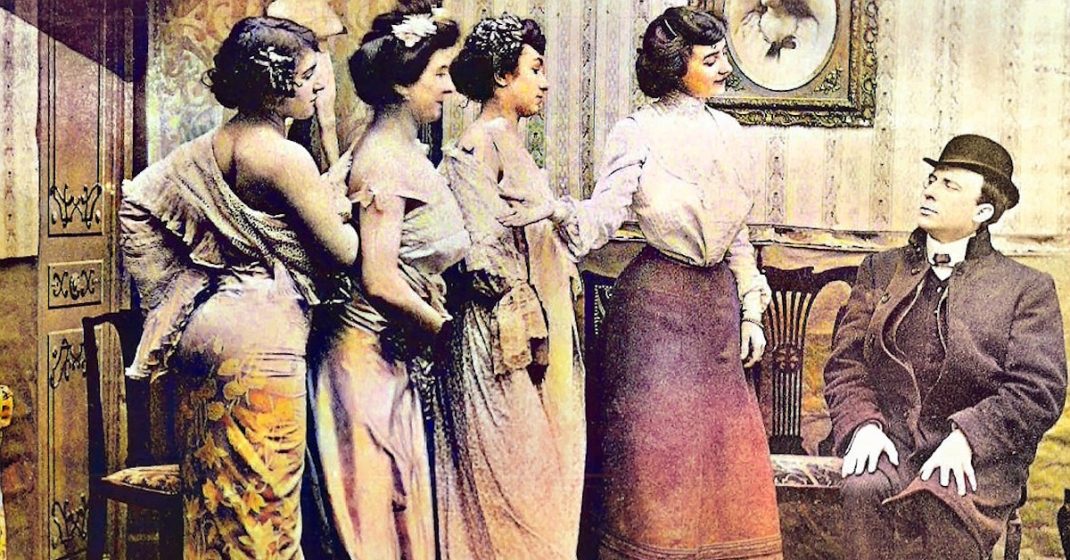
Abortions, brothels and Nauvoo are words that shouldn’t ever be in the same sentence. Nauvoo, the city of God, advertising brothels and practicing abortions? It is almost unthinkable. However, we do have several accounts of this happening. It also makes you wonder why these ‘righteous’ women would work in brothels or choose to have an abortion, and why they would come to even believe it was a righteous practice at all.
John C. Bennett
I do want to be clear. This is not a discussion about polygamy. This really actually has nothing to do with polygamy and whether Joseph was involved or not. This is, in reality, a discussion about John C. Bennett and his brothels or possible use of abortion, in Nauvoo, to prevent unwanted pregnancies. The use of abortion may have extended beyond this, to Joseph or the other leaders, however we have no contemporary evidence to suggest this to my knowledge. We do though have a lot of information suggesting John C. Bennett used abortion himself, in Nauvoo, as part of his medical practice.
Bennett is a very interesting character in Mormonism, and it is strange that someone like him would have risen to become a president of the entire church. I don’t want to focus too much on him personally since that would be a discussion in and of itself. However, it is important to understand that he seems to have been a deeply unscrupulous person from the very beginning.
Prior to his baptism in September 1840, Bennett wrote several letters to Joseph [1], [2], [3], [4], between July 1840 and August 1840. Joseph immediately gained a very favorable opinion of Bennett and responded to him, that he should relocate to Nauvoo and join with the people. Joseph wrote:
It would afford me much pleasure to see you at this
Joseph Smith, Letter to John C. Bennett, August 8, 1840timeplace, and from the desire you express in your letter to move to this place I hope I shall soon have that satisfaction.
Later that month, Bennett permanently relocated to Nauvoo, without his wife or children, and then was baptized the following month in September. Almost immediately Bennett became indispensable to Joseph and was also instrumental in helping pass the Nauvoo City Charter. Bennett even gained praise from Abraham Lincoln for his political skills in passing the Charter. The Charter itself, which was passed on December 16, 1840, allowed Nauvoo to establish a city government, maintain a legion, and establish a court system.
Just two months later, with Bennett having been a member for only 5 months at that time, Bennett became the first mayor of Nauvoo, on February 1st, 1841. After this Bennett was given increasing levels of responsibility, within Nauvoo and the church. At one point, Bennett was Assistant President of the church, mayor of Nauvoo, General of the Nauvoo Legion, and chancellor of the University of Nauvoo.
In many ways, Bennett was second only to Joseph. This was largely because both Hyrum and Sidney, who were also in the First Presidency, were not nearly as gregarious as Bennett was. Bennett seemed to be the type of person who could immediately embed himself into any group and become a central figure. This clearly showed in his almost immediate rise in responsibility in Nauvoo. Bennett though was outwardly very charming, while inwardly being rotten to the core. This ultimately led to his excommunication on May 11, 1842. In just over 1 1/2 years, Bennett rose to become the second most influential man in Mormonism and then just as quickly, the most despised one.
Brothel
Once Bennett was situated in Nauvoo, then almost immediately he started to play very loose with moral boundaries, and the people of Nauvoo seemed to generally accept it. One of these moral boundaries was establishing a house of prostitution, or “house of ill fame”, as it was referred to at the time. From historical records, we know that there were a few different brothels in Nauvoo, and Bennett seemed to be responsible for at least one of them. Bennett’s brothel was reportedly quite near the Nauvoo temple. I guess after a long hard day of working on the temple, then someone could pay a visit to the brothel and unwind if they so chose.
We don’t have many detailed accounts of the brothels, as things like this were not openly discussed at that time, and the practice was very much frowned upon. However, we do have enough information to paint a compelling picture of the situation. According to an account in the Temple Lot Case, from a man named John Taylor. Bennett’s brothel was actually openly advertising and there was very little secret about it at all. Taylor mentioned:
This ill fame house that was built there John C. Bennett was the head man of it, and after they got it built they wrote on it in large letters what it was for … we couldn’t get to meeting without passing this house there looking right at it, for it was close to the meetings grounds, and a thousand or two thousand would go there to meeting on a sabbath day, and they didn’t feel very good seeing that house there with these great big capital letters right there facing them when they would look at it.
John Taylor, Temple Lot Case, 1891
It seems then that the brothel was an open secret of sorts. Very likely it wasn’t encouraged, but was simply tolerated as a necessary evil. It is hard to imagine today, however in the 1800’s brothels were seen as a way to preserve the sanctity of marriage. The idea was that men’s desires could be alleviated in the brothels and that would prevent the respectable married woman from becoming a target of those desires. This seems a bit backwards today, however that was essentially the prevailing idea in the 1800’s. In an 1855 work, this idea is reiterated that brothels were actually good for society.
[Brothels were] the best safe guards to the virtue of maidens, wives, and widows, who would otherwise be exposed to violence and outrage.
Guide to the Harems and Turkish Palaces of the Empire City, 1855
In addition, there was a popular 1839 book titled, Prostitution Exposed, that acted as a guide to the underbelly of New York city and close urban areas. This guide described the brothels and the women themselves, in middle class terms, such as, “quiet,” “orderly,” “private,” “genteel,” and “respectable”. It also provided brief summaries of each brothel and what a person might expect. Essentially, the goal was to introduce a person to this new secret world and remove many of the unknowns that might prevent them from participating.
The people of Nauvoo however, eventually couldn’t tolerate the brothels anymore. The city council met, on May 14, 1842, to pass an ordinance banning brothels within city limits, declaring them a public nuisance. Bennett, the Nauvoo mayor at the time, seems to have tried to oppose the ordinance however was unsuccessful and signed it in to law. The Nauvoo ordinance mentioned:
Be it Ordained by the City Council of the City of Nauvoo, that all Brothels or Houses of ill Fame, erected or being in the City of Nauvoo, be, and the same hereby are henceforth prohibited, and by Law declared public nuisances
Nauvoo City Ordinance, May 14, 1842
According to an October 15, 1842, account in “The Wasp” newspaper, Bennett did try to get the city council to allow the brothels and make them legal. Allowing the brothels would certainly have sent a confusing message, since Mormonism itself was firmly opposed to any kind of immorality. I can’t imagine Bennett’s arguments, however he must have argued that they were serving a public need and so shouldn’t be closed. If the city council allowed the brothels to remain open, this of course would look incredibly bad for the leadership and the church in general.
After the city council passed the ordinance, it seems the people of Nauvoo were emboldened and went around destroying the brothels. The same John Taylor, in 1891, who spoke about how Bennett’s brothel was openly advertising, remarked about how the men of the city destroyed the brothel. Taylor mentioned:
They considered that house was a nuisance, and the authorities passed an ordinance against it, and notified them to move the nuisance outside of the city limits, and gave them time sufficient to do so. Well they paid no attention to that order for they did not feel inclined to obey it and they did not move it. … Well they went in then and took the building and put it on rollers, and there was a deep gulley there and they pitched the house in it, … – down it all went into that gulley, and that was the end of the transaction.
John Taylor, Temple Lot Case, 1891
Abortion
A side effect of brothels is pregnancy, which it appears Bennett had a solution for. We have several accounts, that Bennett was practicing abortions in Nauvoo. However, the extent of this practice is up for debate. Some accounts implicate Joseph, and his supposed wives, while other accounts do not. It does make sense that word would get around among the women and they would take advantage of this opportunity, if deemed safe. We also know that Bennett was a self-admitted philanderer, however he never had any children with any of these women. This is highly unlikely unless some form of abortion or effective contraceptive was practiced.
In early 1842, word was getting around of Bennett’s indiscretions and his use of his church office in an attempt to seduce women. Several of these women testified before the high council that they had engaged in intercourse with Chauncey Higbee and John C. Bennett, since they believed it was correct according to the teachings of the church. Both of these men were excommunicated as a result.
Bennett retaliated against Joseph by publishing his book, History of the Saints, which exposed many of the inner workings of the church such as the masonic endowment. However, Hyrum responded by letting the world know, just what kind of person Bennett actually was. Hyrum published his affidavit in the July 27, 1842, edition of The Wasp newspaper, which read:
John C. Bennett endeavored to seduce them and accomplished his designs by saying it was right; that it was one of the mysteries of God, which was to be revealed when the people was strong enough in the faith to bear such mysteries … also stating that he would be responsible for their sins, if their was any; and that he would give them medicine to produce abortions, providing they should become pregnant.
Hyrum Smith, July 27, 1842, Published in Wasp
Bennett continued his assault against the church by publishing a series of letters, in the Sangamo Journal, exposing more aspects of Mormonism. One of these was the infamous happiness letter which supposedly was a result of Joseph attempting to seduce Nancy Rigdon.
In a final blow against Bennett’s credibility, a series of affidavits were published in Nauvoo, on August 31, 1842. These directly attacked Bennett’s own statements and affidavits. These were titled, Affidavits and Certificates, Disproving the Statements and Affidavits Contained in John C. Bennett’s Letters. One of these affidavits was from Zeruiah Goddard, which spoke of an account she received from Sarah Pratt. Sarah was the wife of Orson Pratt, and was living with the Goddard’s at the time, while Orson was on a mission. Zeruiah mentioned:
Mrs [Sarah] Pratt stated to me that Dr. Bennett told her, that he could cause abortion with perfect safety to the mother, at any stage of pregnancy, and that he had frequently destroyed and removed infants before their time to prevent exposure of the parties, and that he had instruments for that purpose, &c.
Zeruiah Goddard, August 31, 1842, Published in Affidavits and Certificates
Both Zeruiah and her husband, Stephen, had accused Sarah Pratt of having an affair with Bennett, which Sarah didn’t deny. Sarah and her husband did have difficulties with the church and were excommunicated on August 20, 1842, and then rebaptized early the next year. Sarah however, never fully accepted Mormonism again and was excommunicated again later in her life.
In an 1886 interview, published in the book, Mormon Portraits, Sarah related her experiences in Nauvoo, and remarked that abortion was actually practiced quite widely. Sarah did seem to have an axe to grind so her account shouldn’t be automatically taken at face value. However, as she was almost certainly involved in an affair with Bennett, she would of course have had first-hand knowledge of the entire situation. Sarah mentioned:
You hear often that Joseph had no polygamous offspring. The reason of this is very simple. Abortion was practiced on a large scale in Nauvoo. Dr. John C. Bennett, the evil genius of Joseph, brought this abomination into a scientific system. … They sent the women there, when they showed signs of celestial consequences. Abortion was practiced regularly in this house.
Sarah Pratt, 1886, Published in Mormon Portraits
As mentioned, Sarah was quite antagonistic against the church, so it is hard to really understand whether this is a true account or simply grossly exaggerated like Bennett himself did in almost all of his attacks against Joseph and the other leaders. It does appear that abortion was being practiced in Nauvoo, to a degree, however the extent of that practice is entirely unknown.
In 1887, William Law, who was a member of the First Presidency in Nauvoo, was interviewed and was able to provide his view of the events of that time. William, did help produce the Nauvoo Expositor, which greatly exposed what was happening in Nauvoo. However, William himself was not very vocal about what he considered the flaws in Mormonism.
The 1887 interview did however help to establish William’s views of the church and how things could have been better in Nauvoo. The interview was published in the July 31, 1887, edition of The Daily Tribune in Salt Lake City. When asked about the abortion practices in Nauvoo, William mentioned:
Did you ever hear of abortion being practiced in Nauvoo?
William Law, March 30, 1887, Published July 31, 1887, The Daily Tribune
Yes. There was some talk about Joseph getting no issue from all the women he had intercourse with. Dr. Foster spoke to me about the fact. But I don’t remember what was told about abortion. If I heard things of the kind, I didn’t believe in them at that time. Joseph was very free in his talk about his women. He told me one day of a certain girl and remarked, that she had given him more pleasure than any girl he had ever enjoyed. I told him it was horrible to talk like this.
This of course is a very late account of the events in Nauvoo. However, it does align with the previous accounts including Hyrum’s 1842 affidavit. There was a secret system of abortion going on in Nauvoo, with the particulars and the extent completely unknown.
Depending on who we want to trust, it may have involved Joseph, or it may have been strictly used for Bennett’s illicit encounters only. If Joseph was free however in his encounters with women, as William Law suggested, then Joseph would have to have practiced some kind of method to limit pregnancies like Bennett did with abortions.
Conclusion
John C. Bennett was without a doubt a troubled individual that obscured much of the good that Joseph was trying to accomplish in Nauvoo. It is quite unfortunate that he ever joined the church and was allowed such a prominent place in Mormonism. It seems his natural affinity for charm, and the growing church were a perfect match that allowed him to operate almost unchecked for a time.
When his deceitful actions were finally exposed and he was forced to leave the church, then the extent of his actions became apparent. He had essentially almost immediately begun to use the church to further his own ambitions of lust and pride. It is hard for me to understand how someone could be so callous and even do so in the name of God.
From the historical record though, it appears that Bennett simply operated using a completely different moral compass than most people did. He appears to have been perfectly fine with being a leader in a church that taught moral fidelity. While operating a brothel and aborting any children that were created as a result of the indiscretions. According to several of the women involved, Bennett told them that if it was a secret then it was perfectly fine according to God. This doesn’t really make a lot of sense when viewed from the outside. However, if a prominent and powerful individual, makes that argument eloquently, then I can see how the women could have been deceived.
The people of Nauvoo also seemed to have felt that since Bennett was a leader of the church, then what he was doing was implicitly good and holy or maybe they were just like William Marks, who simply didn’t feel it was his place to question the leaders. Today many in the LDS church are also like this. They think it is just not their place to question the leaders and trust that what the leaders do is the best course of action.
This really is a problem in Mormonism. We are taught that the leaders can’t lead us astray because only they have the keys and the authority to lead us. Without the leaders, then we would be spiritually lost, therefore we must trust in them completely. In addition, Bennett like many others, also used the name of Joseph in an attempt to elicit the trust of the women. This seemed to work amazingly well.
This does also pose a very interesting question. Why did the women of Nauvoo trust Joseph so much, that they would willingly engage in something that they knew to be wrong, simply because they thought that Joseph said that it was correct? The current anti-polygamy movement has shown that the historical records are not always perfectly clear. However, one thing is very clear. Since some women seemed to trust Joseph implicitly, then they were willing to do virtually anything if they felt that Joseph approved of it. This is an incredibly easy trust to be taken advantage of, and it seems some people did just that.
