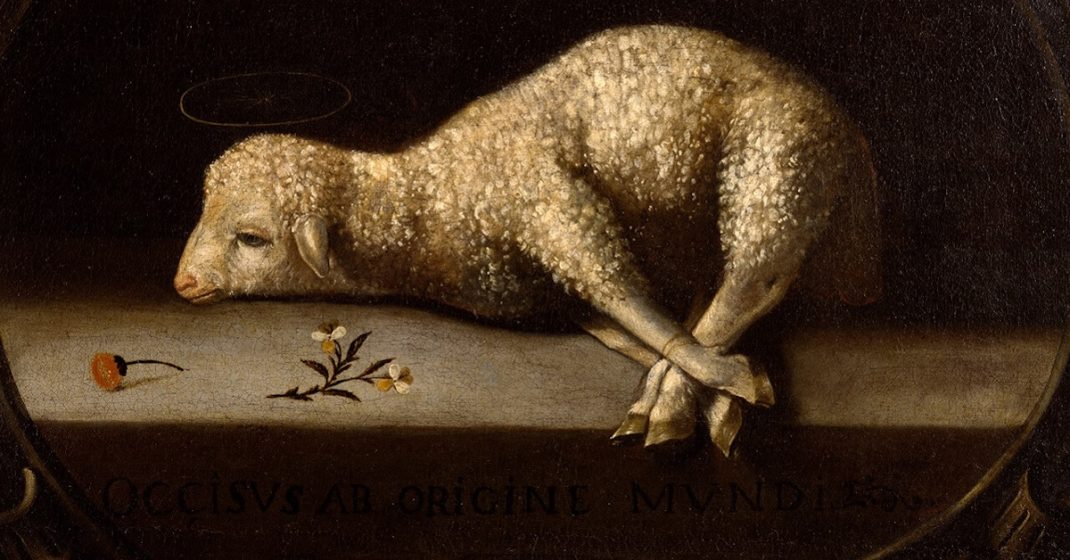
In Christianity, there is nothing more fundamental than the atonement, yet also nothing more mysterious. We speak of the atonement in certain terms, yet there is nothing certain about it at all. The understanding is that Jesus died for our sins, so that we can live with God again and have him accept us. This sounds so simple and obvious. Yet it creates an endless amount of questions. The first of which is, why does God hate his own creation so much that someone needed to die for him to feel better about us?
Theories
In Christianity, and Mormonism itself, there seems to be an endless array of theories about how the atonement works. Of course, everyone is certain their theory is correct and the rest are bogus. However, since the atonement is such a vague concept then speculation naturally runs rampant. It also doesn’t help in the slightest, that we can all read the same text and come to completely different conclusions. For instance, many will view a general statement like “Jesus died for us” as being crystal clear. However, honestly what does “died” mean? What does “for” mean? And what does “us” mean? The only thing that is clear about that, is that it’s not clear.
I do want to look at a few of the theories about the atonement and then offer some brief ideas about each. One trouble about this, is that everything makes sense if you accept certain assumptions. However, if you don’t accept those assumptions, then things quickly fall apart. This is a complication with any kind of discussion. Everything is clear because of the unstated assumptions, which can sometimes be quite difficult to even recognize.
Another complication in supporting each theory, is that we could use the same exact verses of scripture to support completely different theories. This is all because of the way that we interpret the text. The interpretation of the text is actually far more important than the words themselves. This is why people can use phrases like, “the mysteries of God”, and interpret it to mean exactly what they want it to mean, which oddly seems to always align with their current beliefs.
Penal
Scriptures: Isaiah 53:5-6, Mosiah 14:5-6, 1 Peter 2:23, 2 Corinthians 5:21, 2 Nephi 2:7, Alma 7:13
In Mormonism, the main idea of the atonement seems to align more with the need to appease God’s divine justice. This is something that we will delve into shortly. However, in Christianity overall, the atonement is seen more as a means of appeasing God’s wrath, for sin, and need for punishment because of our disobedience. This theory is typically called the Penal Substitution theory. According to this idea, sin needs to be punished by God, and Jesus suffered that punishment for us. Without this punishment then God would be so angry towards us, that he would need to destroy us forever, since we are incapable of accepting the punishment for our own sins.
Most of Christianity accepts this theory since it aligns rather well with the angry vengeful god we see in the Old Testament. For instance, in Exodus 32, Numbers 14 and Deuteronomy 9, God wanted to completely destroy the Israelites, who were his own people, for their disobedience. It wasn’t until Moses essentially calmed God down, that the Israelites were saved from destruction.
In addition, there are numerous scriptures, particularly in Paul’s writings, like 2 Corinthians 5, Galatians 3, and Hebrews 10, which state that Jesus took our sins upon himself. He suffered in our place so that we don’t have to. Since we are now right with God, then we can return to his presence though the shed blood of Jesus. This is a very typical message one would hear in an average Christian church on Sunday.
Problems
The problem with this idea though, is why is God so angry with sin, so much that he would kill us for it, when it is a basic part of our entire existence. He created us so that it is actually impossible to go through life and not sin. This means that just being alive is a sufficient cause for God to banish us from him forever.
This is quite strange when you think about it. Considering no parent would banish their children for doing something that they couldn’t avoid doing. Would anyone really toss a toddler outside of the house for throwing a temper tantrum, because they can’t find their teddy bear? No. You help her find it and show her a better way.
Another problem is if God just wants to punish someone for sin, then why can’t he punish us for our own sins, if we live forever. Sure, the punishment would have to be over a very long period of time. However, a small punishment over a long period of time would still pay whatever debt is required. For instance, a top-of-the-line Lamborghini can run about $5 Million, which is quiet outside the range of most people’s ability to pay. However, if we lived forever then a million-year car payment would be about $0.40 per month. This is easily in the realm of almost everyone.
In addition, would something relatively minor like stealing a candy bar really banish you from God for all eternity? What if I paid the candy bar back? Why would that sin, which I personally corrected, not be right in God’s eyes? Almost every single thing can be made right with enough time, patience, and desire. Therefore, isn’t it really better for me to correct my own mistakes rather than just saying Jesus is going to?
Another fundamental problem with this concept, is what if Jesus simply said no. What if he realized people are a mess and he just told God, “No thanks”. Does this then mean that we would be permanently banished and consigned to hell? Does God’s entire plan hinge on whether someone like Jesus would be willing to suffer for the sins of the world? This seems like such a critical point of failure, considering it is entirely outside of our ability to control. I can’t even imagine how God would even let things be like this.
Ransom
Scriptures: Matthew 20:28, 1 Timothy 2:5-6, 1 Peter 1:18-19, 2 Nephi 2:6-8, Alma 34:9-16
The next theory is the Ransom theory of the atonement. The idea is that God created Adam and Eve as perfect beings according to his divine order and everything was supposed to remain in that state forever. However, when Adam and Eve ate the fruit then they sinned and fell into the grasp of Satan eternally. Sin was outside of God’s divine order, and it was now impossible for them to escape this punishment in their own right.
In this theory, Jesus came to earth, lived a perfect life, and then died as a ransom for us, to free us from Satan. Satan accepted this perfect offering and then released his grasp on us, since the debt was paid. Since we are no longer in the grasp of Satan, then we could return to the way that God originally intended us to be. According to this way of thinking, we would very much be like a lost possession that was found by someone, but we had to pay a price to get it back. Once the price is paid, we own it again, however presumably if we lost it again, then the cycle would have to repeat.
Problems
The main problem with this theory is that it gives Satan an enormous amount of power. Essentially more power than God himself. For instance, Satan seems to control everything outside of the narrow spectrum that would be under God’s dominion. One minor misstep and you are eternally bound by Satan.
It also seems to make our relationship with God or Satan entirely transactional in nature. Does this mean that we could sin, but if we gave Satan something that he wanted, then the sin wouldn’t matter anymore? In this way, sin is only a means of control because it causes us to be owned by Satan, or under his influence. Not because the sin itself is undesirable, or because it makes us less like God.
It also doesn’t address the effects of any future sins we would commit. There is no way that God could buy us from Satan, and then Satan not want us back, when we sin again. If sin is a condition that causes us to be under Satan’s control, then we would always be under his control when we sin. This is even if we would sin in heaven itself.
You can’t buy something from a store, and then automatically own the factory forever. Jesus’ atonement is described as infinite. However, would Satan really accept an infinite payment like this. I don’t see why he would. It would always just cover past sins, not all future sins, for all of eternity, for all people.
Reverse
Scriptures: Romans 5:12-21, 1 Corinthians 15:21-22, Hebrews 2:10-18, 2 Nephi 2:6-10, Mosiah 3:19
The next theory is the Reverse theory, or as some call it, the Recapitulation theory. In this theory, we deviated from God the moment that Adam and Eve ate the fruit in the garden. Since that point in time, we have continued to deviate and get further away. Jesus however came to live a perfect human life and to right the ship which corrected our course. In this way, Jesus came to repoint us back to God and reverse our wayward course. Simply put, Jesus came to undo our fall from the garden.
In this way, once we accept Jesus then our course is repointed back to God, and we can continue like we were supposed to do so back in the Garden of Eden. Essentially Jesus was remaking humanity in the way that it was originally intended to be. Since it was now fallen and lost by the fall.
Problems
The Recapitulation theory is really not a theory of the atonement at all since it doesn’t explain anything. It just avoids the problem altogether by ignoring it and saying it is fixed because of Jesus. For instance, it says nothing about how sins cause us to deviate or how Jesus now fixed this deviation, even though we still sin.
It also mentions nothing about Jesus’ actions in Gethsemane or on the cross and how they impacted our relationship with God. Lastly, it mentions nothing about how repentance fits into the picture. If Jesus made us right with God again, then really why should I repent and change? It seems I actually don’t need to at all.
Conflict
Scriptures: Colossians 2:15, Hebrews 2:14-15, Revelation 1:18, Mosiah 16:7-8, 2 Nephi 9:10-12
The next theory of the atonement states that there was an eternal battle between good and evil and that Jesus sacrificed himself in order to defeat the powers of evil. This is commonly known as the Conflict theory, the Christus Victor theory, or even the Dramatic theory. In this theory, death, hell, and Satan are merely concepts of evil that must be overcome for us to be free. In many ways it is similar to the Ransom theory, since in the Ransom theory Jesus bought us from Satan. However, in this theory there was no purchase, but a general concept of winning the war which made us free.
For a large part of Christianity this was the dominant theory of the Atonement, as good and evil were seen as eternal forces in constant opposition. God was the source of all good, and evil was strictly anything that wasn’t good. Due to the fall of man, we were bound by the forces of evil and needed to be rescued. Once rescued, we could presumably continue in this good state of God.
Problems
Since this theory is really just a generalization of the Ransom theory, then it also shares the same problems as well. In this theory, we were not specifically bought from Satan, but generally bought by conquering evil. For instance, instead of giving Satan power in this case, then the general concept of evil has power enough to bind us eternally. It doesn’t say how evil binds us, in this case, but just that it does.
It also seems to describe our relationship with God in a similar way as the transactional approach in the Ransom theory, but in this case a more general pass or fail concept of being owned by God or not. We are either in evil, which would be a fail or hell case, or in good, which would be pass, or in heaven. According to this, there is no middle ground possible.
In addition, this theory doesn’t describe anything about the future as it simply says God won so the problem is solved. What if we sin in the future while in heaven? Why could this not be possible, if we have agency? If we do sin, then wouldn’t we fall back into the realm of evil and consequently Satan’s realm?
The theory really doesn’t describe anything but just simply says that Jesus won so we are free. Since Jesus won, then why do we need to repent at all? Once we are redeemed by God, then shouldn’t we just be able to do whatever we want and stay redeemed? If not, then what does redemption even mean, since we can presumably sin on earth and continually be forgiven here.
Honor
Scriptures: 1 Corinthians 6:20, Acts 20:28, 2 Nephi 2:7, Alma 34:9-12, D&C 45:3-5
The next theory of the atonement is typically called the Divine Honor theory or even the Commercial theory. In this theory, it states that as a default, humans bring dishonor to God that needs to be rectified. Through Jesus’ unnecessary sacrifice he brought honor again to God and Jesus, as a merciful being, shared that honor with us.
With this extra honor, then we can restore our own dishonor with God and become right with him again. Effectively paying our debt of dishonor. Once this is done, then it would be as if we never dishonored God in the first place, as we would be honoring him again going forward.
Problems
This theory like all the other theories, paints God as a somewhat mean or demanding entity and Jesus as the benevolent merciful intermediary. It also is incredibly unclear why humans, being the way they were created to be, would bring such dishonor and shame to God. Also, why would God, who is by definition above all, care about something like honor. Wouldn’t he naturally have honor as part of his elevated station? To me it would be like a parent having a power struggle with a toddler. Yes, the toddler may think they own the house. However, who really does and why does the toddler’s opinions on it matter at all?
Specifically though, since honor is what is needed to be paid according to this theory, then it is just another way of describing the Ransom theory or even the Penal Substitution one. In this theory, honor is the currency, in the Ransom theory the currency is undefined yet still present, and in the Penal Substitution theory the currency is punishment. However, all describe some concept that needs to be paid to Satan or the generic concept of evil, in order to redeem mankind.
This also means that if all we need to do is honor God, then why can’t we do that ourselves, once we know how? Once we honor God enough, through our own actions, then shouldn’t that be sufficient to restore our relationship with him again? Is it not possible to overcome dishonor with honorable behavior?
Justice
Scriptures: Alma 42:13-15, 2 Nephi 2:7-8, Romans 3:23-26, Hebrews 9:12, D&C 19:16-17
The next theory is the Justice theory or the Satisfaction theory of the atonement. This theory is fairly predominant in Mormonism. In this theory, it is believed that our actions cause a sense of divine injustice and that injustice needs to be eternally corrected. Without this correction, then since God is wholly just in his nature, then we are forever separated from him. Essentially, God and man are eternally incompatible.
It is this debt that must be paid, and the currency for the transaction would be the concept of justice. In this concept, justice and injustice are eternally in a balance, and through our sinful actions, we have tipped the scales in favor of injustice. Any injustice in the universe, whether big or small, must be effectively undone with a corresponding act of justice, in order to satisfy God’s eternal demands for justice.
Problems
This theory is exactly like the Honor theory, the Ransom theory, or even the Penal Substitution theory. A debt must be paid and the balance in the account must become zero. For instance, in this theory the currency to pay the debt is justice, in the Honor theory the currency is honor, in the Ransom theory the currency is unspecified, but still present, and in the Penal Substitution theory, the currency is punishment. In all the theories a transaction must be paid to Satan or the overall concept of evil in order to restore humanity back to their intended place.
Since it is so similar to those other theories, then it also shares the exact same problems, however they are just tweaked slightly. In this theory though, then the general concept of justice to the law becomes a controlling factor in all of God’s interactions with it, as it makes God subservient to the law itself. Did God create the law, or did the law create God? According to this theory, God needs to satisfy an eternal sense of justice as part of his very nature therefore the Law controls God not the other way around. In Mormonism, we don’t like to think this way and just relabel the law as being a higher God instead.
In addition, if Jesus is correcting this eternal injustice on our behalf, then what exactly does this mean for us personally? Why do I really need to repent if Jesus already fixed the problem. Yes, of course I need to repent because Jesus asked me to. However, what if I don’t want to? Jesus already paid the price so shouldn’t that be good enough for God? If I need to repent still, then that means Jesus didn’t sacrifice himself for me, but for only a specific group.
Government
Scriptures: Romans 3:25-26, Alma 42:13-15, Hebrews 2:2-3, 1 Timothy 1:9-10, D&C 19:16-17
The next theory of the atonement is typically called the Government theory. In this theory, it describes how our sinful nature has upset God and Jesus consequently appeased God’s wrath through his sacrifice. Jesus however didn’t take our specific punishment, but just a punishment, that was sufficient to appease God again and show God’s displeasure with sin. According to this theory, Jesus suffered and died in order to show us the high cost of sin and our disobedience from God’s will. In this way, Jesus’ actions are a caution, or a warning for us, and meant to turn us back to God.
In this theory, it also states that Jesus did this only for those in the church. In this way, the church acts as an umbrella or a covering for individuals in the church. This is because, those outside of the church would still be under the full effects of the punishment for sin, as they are not covered. In this case, the word church could mean whatever we want it to mean. However, it would typically be whomever accepts Jesus and wants to be forgiven of their sinful nature.
Problems
Since this theory is basically just a limited version of the Penal Substitution theory, then it also shares the same problems that it has. Why does God need to punish us for being exactly like he created us to be? Why can’t we be punished for our own sins and then become right with God again? Sure, that would be unpleasant, however why is it not possible at all?
In addition, since this forgiveness is for the church only, then it seems much more like a paperwork or administrative function than anything else. If we are in the church, we are forgiven, if we are outside the church then we are not. This is effectively saying those with a special card can get into heaven, while those without the card are barred forever.
In addition, if all that is required is to be in the church, then doesn’t that mean repentance and personal change is now completely unnecessary? Why should we improve or change at all since that is now completely optional? In this way, the atonement, according to this theory, is purely a symbolic victory instead of a literal one.
What about those outside of the church though? Are they lost forever or at some distant future time will they be accepted by God again? If they are accepted, then what does that mean for those in the church? From an eternal perspective all that will just be a blip, so it is unclear how being in the church, versus being out of it will fundamentally change anything at all.
Moral Influence
Scriptures: Romans 5:8, John 15:13, 1 John 4:9-10, 2 Corinthians 5:14-15, Mosiah 5:2, Moroni 10:32-33
The last theory of the atonement is a large departure from the previous ones, and doesn’t describe our relationship with God in any kind of transactional way, or an external one at all. Instead, it describes the atonement as a way that Jesus helps us transform internally. This is known as the Moral Influence theory, the Mystical theory, or even the Example theory by some.
This is because in the other theories, the atonement is always described as meeting some kind of external need or demand, which we are eternally bound by. However, in this theory it is all internal to the individual themselves. Jesus helps us change internally so that we can meet the level required to be with God, or so that we can simply just be more like him. In this way, it makes sense when Jesus said in Luke 17 that the Kingdom of God was within us. We are always focused on the external, when we should be focused on the internal.
According to this theory, Jesus came to be an example to us, and to help us change our inward natures in order to realign us with God. Jesus didn’t come to satisfy eternal demands of justice, honor, or paying a debt, but just to simply show us a better way. This theory also departs from the others, which focus only on the suffering in the garden of Gethsemane, or his death on the cross, and instead focuses on the entire life of Jesus. His teachings in the Sermon on the Mount, for instance, were just as important as his death was. His entire life was an example to us.
In this way, his death was just a result of his radical teachings and not necessarily divinely decreed to satisfy God’s wrath or an eternal debt that we couldn’t pay. This would make Jesus as the ultimate teacher, the ultimate example to follow, and the ultimate martyr for his beliefs. This also takes on incredible significance if you believe that Jesus was in fact God made flesh. According to this concept then, God himself came down to show us the proper way to live and be, and how to be proper humans according to his divine design. In my mind, any creator would do this for their creation.
Problems
Since this theory is about an internal change, as opposed to an external one, which all the other theories are, then it does have far less complications. In fact, it has almost no complications except for the fact that almost all of scripture describes the atonement as satisfying some kind of external demands, as opposed to internal ones. Or at least, the common interpretation of those scriptures implies this concept. Of course, this could be a showstopper problem if one wants it to be.
In addition, to many it can cause the atonement to simply become reduced down to just an inspirational example instead of a defining triumph of good over evil, as we are typically taught in Sunday school. Since the idea of God’s wrath needing to be satisfied, or at the very least an external concept like honor or justice, then an internal only one like Moral Influence is somewhat like a foreign concept to most Christians. We are told that Jesus died for us, or that Jesus suffered for us, and we are now free. The “for us” is constantly drilled into our minds, so Jesus’ life as an example instead can become a high hurdle to accept.
This theory does, however, completely redefine our relationship with God. We no longer are bound by the way that God made us to be and can choose individually to become better versions of ourselves. There is not a general concept of Satan or evil that eternally holds us until a price is paid. The only thing limiting us, is our own desire to improve.
Conclusion
In looking at the atonement, it is clear that not very much is clear. There are numerous theories, with each trying to overcome the shortcomings of the other ones. In almost all the theories, the atonement serves as a means of making right an external demand placed on God. This demand is sometimes Satan, sometimes vague concepts such as evil, or even general forces that seemingly bind God, like honor or justice. In classic Christianity, it is hard to imagine God, who created all things, being held hostage by something that he created.
It is also not just being held hostage. God created humans to be sinful, and we are held hostage by our very natures, which in turn, holds God hostage in an attempt to forgive us. It is all quite confusing to be honest. Essentially in every one of these externally dependent theories, Jesus came to correct a fundamental flaw in God’s creation. We don’t want to blame God for the flaw, so we invent complicated lines of reasoning to instead suggest it is outside of God’s power, and Jesus was there to fix the problem.
As was mentioned earlier, since all these theories, except Moral Influence, are directly dependent on Jesus, then what if Jesus didn’t want to sacrifice himself for us? This would mean that we would all be lost eternally and unable to return to God. This to me seems like a fundamental problem in God’s entire plan.
The plan of God also hinged on Jesus making a willing sacrifice, which means the sacrifice was not willing at all, but required. Without Jesus, then all would be lost, and God’s entire plan would be ruined and utterly pointless. I can’t imagine how this could possibly be by design. In addition, even if Jesus was God in the flesh, then this is still a problem since it means Jesus was essentially fixing his own mistake. If God can make a fundamental mistake like this, then what other mistakes did he make?
This leaves us with the Moral Influence theory of the atonement. To me the only thing that makes sense is to completely rethink our understanding of the atonement and conclude that Jesus didn’t die or suffer to appease God, or an external concept like justice, but instead to show us a better way of being. This does of course, force us to rethink several passages in scripture. It also causes us to focus more on the life of Jesus, than just his final moments. Yes, Jesus did take upon himself our sins and suffered accordingly. However, this doesn’t mean what we are commonly told it means.
In looking at the scriptures though, just because we call something scripture, doesn’t mean it is unequivocally true. The scriptures are the thoughts and opinions of others in similar situations as we are. We are all trying to make sense of things of God, and so we do the best we know how. In addition, the written word is fundamentally problematic. We all interpret the scriptures according to our current understanding. This creates a self-reinforcing cycle which can be very painful to break free from. We are essentially interpreting the scriptures to support our current beliefs, and then saying since the scriptures support our current beliefs, then that means that they are true.
In addition, all the theories, except Moral Influence, simply say that Jesus paid a price so that we don’t have to. They remove all accountability, and need for an inner change, and place it on Jesus instead. Essentially the idea is, Jesus will make us better, because we can’t do it ourselves. This is especially problematic in Pauline Christianity, which teaches that faith alone saves us.
The Moral Influence theory, however, says that we are still responsible for our own standing with God. Everything is contingent on our own thoughts and desires. There is nothing that permanently keeps us from God, except our own unwillingness to seek him. Jesus showed us a better way and opened a door for us. Whether we walk through that door is entirely up to us individually. Jesus is the Lamb of God, however that means something completely different than what we think it does.
