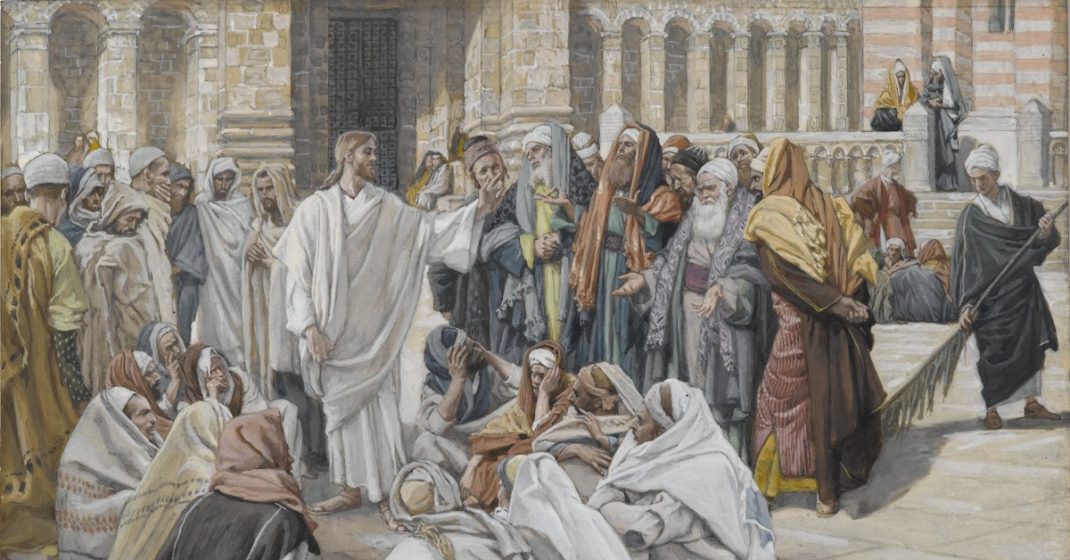
In the book of Matthew, chapter 23, Jesus gave one of the strongest rebukes possible against the organized religion of his time. It was an incredibly pointed attack against the hypocrisy of the scribes and Pharisees, which they couldn’t see. Today, we naturally think that it only applies to them, who Jesus continually railed against. However, it applies to us as well, more than ever. In many ways, we are falling into the same mentals traps that they did anciently. And just like them, we fail to see our own hypocrisy.
Matthew 23
In Matthew 23, Jesus describes 8 woes against the scribes and Pharisees of his day. These woes attack the external rules and performances of organized religion and address the lack of inner transformation that they produce. These external rules create a blindless that cause us to lose sight of the purpose of the religion. Instead of focusing on approaching the divine, we focus on meeting the obligations and rules of the religion and treat, meeting those performances, as a replacement for divine acceptance. If we can appear to be outwardly righteous, then in our minds we are righteous, regardless of a lack of inner transformation.
In Jesus’ day, the scribes and Pharisees were perfect examples of this blindness. Matthew 23 describes how, during the last week of Jesus’ life, the religious leaders of his day were desperately seeking ways to discredit him, to embarrass him, or to find a reason to arrest him. They would do virtually anything to stop him and his movement from growing. His movement was a direct assault against them and their entire way of thinking. Instead of backing down, Jesus began his verbal assault with a direct indictment of their hypocrisy. Jesus told the gathered crowd:
The scribes and the Pharisees administer the authority of Moses, So do whatever they tell you and follow it, but stop doing what they do, because they don’t do what they say. They tie up burdens that are heavy and unbearable and lay them on people’s shoulders, but they refuse to lift a finger to remove them. They do everything to be seen by people.
Matthew 23:2-5 ISV
In this charge, Jesus is acknowledging the role the leaders serve in their society. However, he is imploring them to also see, that the leaders themselves were not examples of the inward change, that should be a result of a religious life. The leaders themselves didn’t even follow the rules they prescribed, and they failed to even see the hypocrisy of that situation.
This is because the leaders now personally identified as the role they performed. They wanted to be seen by others, they wanted the best seats in meetings, and they wanted to be called master. Their very identity was now mixed with the role that they performed. This is what caused the blindness. They were the role, and the role was godly, therefore they were godly. This is of course a direct attack against the general concept of organized religion with prescribed rules and rites.
However, today we can also see it as a direct attack against Mormonism, with their idea of strict obedience, special keywords, and prescribed rules to get to heaven. Just like the scribes and Pharisees, the leaders of Mormonism want to appear holy, they want the best placement in meetings, and they want to be called master. In fact, they want all the same things that Jesus railed against. In addition, their set of rules and performances, lack the inward change that would show the validity of the rules. They hide this in increasingly clever ways. However, it will never go away.
If the rules of Mormonism produced the inward change that Jesus consistently described, then the leaders of Mormonism would be excellent examples of this. Instead, they are examples of using public opinion to shape church policy, examples of focusing on dead works while the living suffer, and examples of placing themselves as lights between us and God. Each of the 8 woes applies to the leaders of Mormonism today, just as much as they applied to the leaders of the past. Jesus really is the ultimate teacher and example for us. His words are uniquely applicable 2000 years later, which is frankly astonishing.
#1
[Woe unto you], scribes and Pharisees, you hypocrites! You shut the door to the kingdom from heaven in people’s faces. You don’t go in yourselves, and you don’t allow those who are trying to enter to go in.
Matthew 23:13 ISV
In the first woe, Jesus attacks the leader’s hypocrisy in denying the people a relationship with the divine, when the leaders themselves don’t even have that relationship. Jesus says the leaders shut the kingdom of heaven from before the people and instead require them to see the leaders as the only valid path to God. Anyone that steps out of line is then excommunicated from the church which eliminates the potential challenge to the leader’s authority.
Today this is no different in Mormonism. We are told that the only valid way back to God, is through the church and its leaders. The leaders have all the keys of the priesthood, and we need those keys in order to be fully accepted by God. Without those keys, and the priesthood ordinances they provide, then we would be unacceptable to God and hence never allowed back in his presence. Anyone that claims an encounter with the divine, is labelled a heretic, or an apostate, and excommunicated from the group. In this way, the leaders eliminate any challenge to their authority or status, and shut the door to heaven, to all those seeking God.
#2
[Woe unto you], scribes and Pharisees, you hypocrites! You devour widows’ houses and say long prayers to cover it up. Therefore, you will receive greater condemnation!
Matthew 23:14 ISV
In the second woe, Jesus attacks the scribes and Pharisees for using their legal system to take advantage of the most venerable among them. In his day, the widows held very little legal power and would need advocates in the court, when their husband’s died. These legal advocates were often the scribes and Pharisees themselves, since they were experts in the law. However, since the widows had very little legal recourse, they were quite often taken advantage of. The property, and belongings, that the widow needed for her very survival, could quite easily be taken, or taxed heavily, and given instead to the already wealthy legal adviser.
Today this is no different in Mormonism. The LDS church uses their immense power and wealth to take advantage of the most venerable among us. To the LDS church, doing the right thing, means what will help them the most. We can see this in their excessive use of the law firm, Kirton McConkie, in order to use the weight of the legal system against anyone, or anything, that poses a challenge.
We can also see this in the LDS church using the legal system to justify their use of the sex abuse hotline. This hotline, which local leaders were required to consult, reportedly would tell the leaders to keep sexual abuse quiet, and not report it to the police. The LDS church was far more interested in maintaining their image, than protecting the most venerable members.
Another immoral use of the legal system is the LDS church is now requiring organizations to stop using the word Mormon, with a threat of legal action for those that don’t comply. They sued a town for denying a permit to build a temple. They hid over 32 billion dollars from regulators, and they have actively used the legal system in order to avoid having to take responsibility for enabling abusers.
According to the website, Floodlit, the LDS church has used the legal system almost 400 documented times to protect themselves instead of the most venerable members. In many different ways, the LDS church has weaponized the legal system against the very people they should be using it to support.
#3
[Woe unto you], scribes and Pharisees, you hypocrites! You travel over land and sea to make a single convert, and when this happens you make him twice as fit for hell as you are.
Matthew 23:15 ISV
In the third woe, Jesus attacks the leaders for going to such great lengths to convert others to the religion, when the religion itself was nothing more than a set of meaningless rituals. In their minds, the rituals were an avenue to God. However, their entire lack of divine experiences showed they were greatly mistaken.
In order to compensate for this lack of inner transformation, converts would quite often prioritize the rituals, and become more dogmatic, in the hope of legitimizing their decision to convert. In this way the blind were truly leading the blind, and the converts new zealotry was actually mistaken for righteousness. This greater separation from God, meant that the converts were in fact spiritually going backwards, and hence becoming children of hell.
Today this is no different in Mormonism. The LDS church uses an extreme amount of time, money, effort, and resources in order to convert others to the church, and yet there are very little encounters with the divine as a fruit of this. We are taught temple, temple, temple, or the prophet can’t lead us astray, or only in the LDS church will we be able to find spiritual safety or the LDS church is the only true church.
In this way we are told to trust in the doctrines, the performances, and the rituals of the church, instead of trusting in a living God. Prior to baptism, a convert could be seeking God, however after baptism they are seeking to align themselves more with the church, and its doctrines, in a hope of approaching the divine. This is a key distinction and is how a religion of external rules, exact doctrines, and performances can make a person fit for hell instead of holy.
#4
[Woe unto you], blind guides! You say, ‘Whoever swears an oath by the sanctuary is excused, but whoever swears an oath by the gold of the sanctuary must keep his oath.’ You blind fools! What is more important, the gold or the sanctuary that made the gold holy?
Matthew 23:16-17 ISV
In the fourth woe, Jesus attacks the leaders for having an inverted sense of righteousness. They would claim the temple and its altar were holy. However, if a person swore an oath by either of them, then it wouldn’t be as valid as if they swore an oath by what was in the temple itself. In this way, the contents of the temple were more important, than what they were meant to point towards, or even the temple itself. The mundane aspects of the temple had become more sacred than the divine they were meant to represent.
Today this is no different in Mormonism. We are told that the temple is holy. However, the only way to return to God, and fully achieve what he wants of us, is through the ordinances themselves inside the temple. In this way, the ordinances are more sacred, and holy, than the temple itself. These ordinances then become a replacement for divine encounters, that they were meant to represent. In addition, during a period of spiritual trouble, we are told, not to seek God more, but to seek the ordinances more.
The ordinances are supposed to point us to God. However, they have become a replacement for God, instead and a checklist item for faithful members. This inversion of importance causes us to lose sight of the divine and focus instead on the rituals themselves that were only ever supposed to be symbolic in nature. The symbols have become more important than what the symbols represent.
#5
[Woe unto you], scribes and Pharisees, you hypocrites! You give a tenth of your mint, dill, and cummin, but have neglected the more important matters of the Law: justice, mercy, and faithfulness.
Matthew 23:23 ISV
In the fifth woe, Jesus attacks the scribes and Pharisees for focusing on the minutia of the law, instead of the purpose of the law itself. The leaders would go to great lengths to make sure they were following the many rules and obligations in the law, all the while ignoring the actual important aspects such as justice, mercy, and faithfulness. They would excessively focus on the external aspects, all the while completely ignoring the internal transformations that the law was meant to facilitate. Their view of righteousness had become how closely a person follows the law, not how closely the person mirrors the divine.
Today this is no different in Mormonism. We are told, not to focus on a connection with the divine, but to focus on our connection with the church instead with its doctrines and rituals. In order to even approach God correctly, according to the church, we must first be temple worthy, which means the church is now a replacement for the divine. To first become temple worthy, we must admit the LDS church is the only true church, must admit the current leader is a prophet, seer, and revelator, must admit he holds all the priesthood keys, and must admit the doctrines of the church are superior to all others.
In addition, we have to promise to attend all our meetings, teach LDS doctrines in private and public, pay a correct tithing, obey the word of wisdom, and wear our temple garments. According to the LDS church, in order to approach God and be worthy of his presence, then we must comply with all the minutia of the church.
Not once is there is a discussion about how closely we follow the teachings of Jesus, how merciful we are to those that seek it, how much we care for the poor and the needy, or how much we are seeking to be transformed by Jesus. Instead, our righteous is determined by how closely we align with the church and its teachings. In this way, the more important matters of the law don’t matter at all anymore.
#6
[Woe unto you], scribes and Pharisees, you hypocrites! You clean the outside of the cup and the plate, but on the inside they are full of greed and self-indulgence. You blind Pharisee!
Matthew 23:25-26 ISV
In the sixth woe, Jesus attacks the scribes and Pharisees for going to great lengths to appear to be clean and holy and not involved with the cares of the world. While the leaders were instead filled with worldly desires, greed, and self-indulgence. They were often using their positions in the church to benefit themselves, their families, and their friends. In this way, they were turning a sacred position of humility and respect, into something that would benefit themselves for life.
Today this is no different in Mormonism. The leaders go to great lengths to appear to be good and holy publicly. However, the church itself is anything but good and holy. The LDS church is in fact one of the richest religious organizations on earth with extensive ties to businesses, real estate, land holdings, and financial investments. With these vast resources you would think the church would be using them to benefit the poor and needy. However, that couldn’t be further from the truth. The church itself admitted that its vast holdings only serve to further the gospel work, which means they only serve to benefit the church itself.
In addition, the leaders themselves receive lifetime appointments and numerous perks by virtue of their positions. From leaked documents, it has been shown that the leaders of the church, receive generous salaries, housing and car allowances, life insurance, tuition reimbursement for their children, reimbursements for gifts and travel expenses, along with a whole host of other benefits. Virtually every one of their needs is taken care of by the church. In this way, the leaders live far above the common person, all because of their religious positions. They have the appearance of righteousness, however, are using the church for their personal benefit.
#7
[Woe unto you], scribes and Pharisees, you hypocrites! You are like whitewashed tombs that look beautiful on the outside but inside are full of dead people’s bones and every kind of impurity.
Matthew 23:27 ISV
In the seventh woe, Jesus attacks the leaders for their hypocritical behavior of exterior righteousness while being completely the opposite inwardly. They appeared to be good and holy, while inwardly being full of hypocrisy and wickedness. They had a carefully maintained public persona to mask the truth and couldn’t see the hypocrisy of their situation because they were now identifying with their religious role instead of their actual behaviors. In many respects, they were ceremonially clean. However, were in fact religiously far from God and didn’t even know it. They believed their exterior image was who they really were. However, the image was simply a fake facade over an inward nature that was in opposition to God.
Today this is no different in Mormonism. The leaders in Mormonism, on the outside, appear to be so peaceful, happy, and picturesque. However, this is just a facade over the many troubling aspects of the church including major doctrinal questions, problems with the temple ordinances, problems with church history, and problems with the priesthood narrative.
In fact, there are numerous problems almost everywhere we look. However, they are all hidden with a well-crafted external image and neatly packed away. We are then told to ignore the particulars, and instead to remain faithful to the church, and its leaders. They will never lead us astray, we are told, and in fact couldn’t even lead us astray if they wanted to. In this way, the external image is what is important, not the dead bones we see on the inside.
#8
[Woe unto you], scribes and Pharisees, you hypocrites! You build tombs for the prophets and decorate the monuments of the righteous. Then you say, ‘If we had been living in the days of our ancestors, we would have had no part with them in shedding the blood of the prophets.’ … You snakes, you children of serpents! How can you escape being condemned to hell?
Matthew 23:29-33 ISV
In the eighth and last woe, Jesus attacks the scribes and Pharisees for elevating the prophets of the past, and acknowledging the disruptive role they performed, while doing everything they can to suppress any current religious opposition. The prophets of the past opposed the leaders of their own time. Yet the current leaders wouldn’t stand for that kind of subversive behavior. The leaders say they would never have persecuted the ancient prophets, while they were doing everything they possibly could to persecute the current ones. This is hypocritical and demonstrates their willingness to embrace the blessings of God and then seek the favor of men.
Today this is also no different in Mormonism. Mormonism itself was founded by Joseph Smith, who went against all the religious conventions of his day. He declared every church to be incorrect and that God had a better way for us. However, today, the very mention of a better way will get you excommunicated from the church. This is spiritual death according to them. The leaders have repeatedly taught that the only way to God is through the church and them with their priesthood keys. There is no other way.
In addition, the leaders of the church today, celebrate the bravery and courage of the prophets of the past, who openly opposed their religious institutions, all while directly teaching that it is apostasy to oppose them today. I am not quite sure what is more hypocritical. They openly admit that opposing those in the past was God’s will, while teaching that any opposition to them today is ungodly. According to the doctrines of the church, they try to spiritually kill the current prophets, just as much as they would physically the ancient ones. It is trivial to say you support the past, while doing everything you can to maintain your current elevated circumstances.
Conclusion
In so many ways, the teachings of Jesus transcend time and space. It is truly remarkable to see how applicable they are even 2000 years later, in a completely different culture. It is sad however to see how much human nature seems to repeat over and over again. Why is it so hard to learn from the past? We seem to be the very scribes and Pharisees, that the scriptures have repeatedly warned us against.
Matthew 23 is an indictment against organized religion that places a set of rules and constraints between the people and the divine. These rules create an inner blindness that prevents us from seeing ourselves accurately. Instead, we see ourselves in context to the religion and our faithfulness to its teachings, or its leaders. In order to gain divine acceptance, we feel we have to obey the religion more fully.
This is an incredibly dangerous trap to fall into, since the religion itself is distorting our understanding of God. How can we really approach the divine more fully, when our very church is teaching us to approach them instead? In addition, we are told that our leaders will get us to God, if we just follow them, and the teachings of the church, more closely. In this way, our leaders very much become a replacement for God. This is the same trap that the people of Jesus’ day fell into. If Jesus was here today, he would tell the current leaders of the church, the exact same things that he told the scribes and Pharisees of his day.
Jesus would tell them to stop shutting the way to God, to stop extorting the members, to stop converting others to the church, to stop inverting righteousness, to stop ignoring the purpose of the church, to stop taking advantage of others, to stop fake righteousness, and to stop persecuting true prophets. There are so many things that Jesus would say to the church if he was here today.
He would simply though tell them to stop being children of hell, and to instead be children of light. God is willing and available to us when we are ready. We must first however, stop our dependence on the church and its leaders for our relationship with God, and instead start being willing to trust in him. The most important thing we can do is to trust God and follow him, even if this means we sacrifice our standing in the church. The real church of God has no artificial requirements for entry, while organizations of men do.
