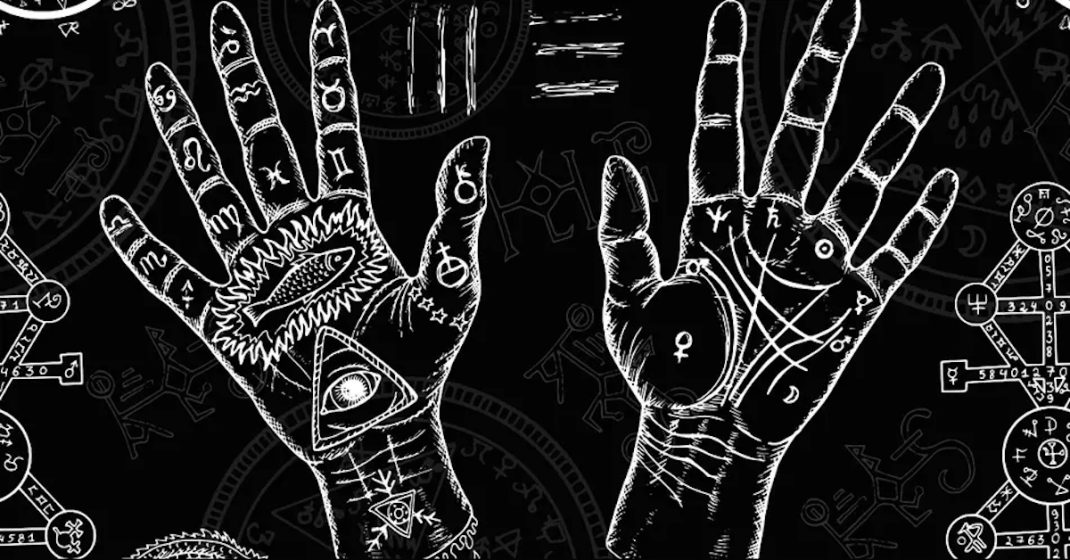
Mormonism is unique among Christianity for many reasons. Most of these differences have eroded over time, and it seems to be getting faster today. However, if we go back to the very beginnings, then we can see many influences that helped shape it into what we know today. These influences include American concepts such as freedom, hard work, and liberty. However, they also include popular concepts of Joseph’s Day such as the occult, mysticism, and a magical world view. Without these influences, that we would reject today, then Mormonism wouldn’t be nearly as unique as it is among Christian denominations.
Joseph
Magic
In looking at Mormonism, and its connection to Christian Magic, or a magical world view in general, then it is helpful to first look at Joseph Smith himself. Many have delved very deeply into this topic pertaining to Joseph, and I don’t want to duplicate their extensive research. However, I do want to very briefly lay the groundwork so there is no misunderstanding about this.
Magic, as a means of influencing the world around us, has not always been accepted throughout history. Magic itself is generally associated with the occult however, the concept of Christian Magic is a unique blend of Christian beliefs, folk magic, and occult principles. These concepts were defined in the 1801 grimoire on magic called, “The magus, or celestial intelligencer”, which Joseph consulted more than once, and which was in his family’s possession. Another very popular book on the occult and magic, would be the 1817 book, “A New and Complete Illustration of the Occult Sciences“. Both books served as a basis for an understanding of magic and occult principles as used in the 1800’s.
Pertaining to Joseph Smith though, he was born in a unique time and place where magical thinking was generally accepted. For instance, in the early 1800’s, dowsing rods were commonly used to locate water or treasure underground, astrology dictated important events in someone’s life, and divination was commonly used through the use of animal bones or tarot like cards. Many people of Joseph’s Day were heavily influenced by magical principles and concepts.
All these things are generally frowned upon today, yet they were quite prolific in the frontier mindset of the early American settlers, with Joseph’s family being no different. As mentioned, this is a massive topic in and of itself, which I don’t want to duplicate here. However, I do want to just lay out more than enough evidence to indicate that magic was a critical aspect of Joseph’s mental model of the world.
The first thing to note is that in Lucy Mack Smith’s history, she mentions that magic was a critical part of their lives, but she wanted to clarify that she didn’t view it as more important than other aspects. They were all important and served different purposes. In her history she mentioned:
I shall change my theme for the present, but let not my reader suppose that because I shall pursue another topic for a season that we stopt our labor and went at trying to win the faculty of Abrac, drawing magic circles or soothsaying, to the neglect of all kinds of business. We never during our lives suffered one important interest to swallow up every other obligation.
Luck Mack Smith, History
Abrac, in this statement would be abracadabra or the use of various incantations to seal blessings or curses on physical objects. Throughout history this has been a very common practice, and was seen, by the Smith family, as a way to bend the spiritual realm to the service of the physical one. For instance, both Hyrum and Joseph, at their deaths, had physical objects with incantations written on them, which we will briefly go over later. These incantations were seen as granting the bearer specific spiritual powers or abilities with certain incantations being seen as much stronger than other ones.
Seer Stone
However, if we return back to the 1820’s then Palmyra itself was known as a haven for folk magic with multiple people using seer stones, or peep stones, in order to access the spiritual realm. These seemingly regular stones were seen as possessing magical abilities which the skilled individual could use for their gain or benefit.
For instance, just in Palmyra alone, multiple people used seer stones to locate lost items or determine things which couldn’t been directly seen. For instance, there was the famous Sally Chase, with her green peep stone, William Stafford with his, and Joshua Stafford which his white marble stone with a hole in the center. According to Joshua, looking through this hole afforded him the ability to see things which were not physical.
The Magus describes different colors of stones for different purposes, with each stone affecting one of the four elements of the earth, namely fire, water, air, and earth. For instance, in The Magus, brown is connected to earth, white or transparent are connected to water and seeing, pumice like stones are connected to the air, and volcanic stones are connected to fire. According to several reports, Joseph used a brown stone while searching for treasure, and a white stone during the translation of the Book of Mormon. This would make perfect sense as it aligns with the various uses according to The Magus.
According to several people, Joseph was a prominent treasure digger of his day and used a brown stone while on numerous expeditions to seek for lost treasure. According to reports, Joseph accompanied Luman Walters, another famous seer, on an unsuccessful dig of theirs.
In order to access the treasure, they reportedly drew magic circles over it and sacrificed a chicken in order to draw the guardian spirit out of hiding. This was ultimately not successful, and they eventually stopped the dig. Joseph also reportedly participated in several other digs, with the use of his seer stone, with none of them being successful. This eventually resulted in Joseph getting arrested in 1826 and charged with glass looking. After this, Joseph promised to give up treasure digging, yet he continued to use the seer stone for years after that point.
Moroni
Another important aspect in folk magic, was astrology or the movement of the planets and stars. Each planet signified different things with events in heaven seen as a representation of events on earth. During one of these significant astrological events, Joseph was reported to have first seen the angel Moroni. Joseph remarked that this event happened on September 21, 1823, which was both a full moon, and the autumn equinox. This was seen as a time of particular spiritual power, as the full moon was uniquely powerful according to The Magus and could magnify understanding of written text, which Moroni reportedly did.
According to the earliest accounts of Moroni’s visit, such as Joseph Smith, Sr.’s version, Moroni was a “little old man with a long beard“. This however was quickly changed to “an angel of light”, by people like Oliver Cowdrey, when describing the event. Joseph in his 1838 History simply referred to Moroni as a messenger from God and described at length the mission Joseph was given by him. He told Joseph of a buried treasure that Joseph needed to retrieve, which are the gold plates which we know today.
Gold Plates
For the Gold Plates themselves, we know virtually nothing about them aside from the Three and Eight witnesses who made statements about them, 2 years after Joseph obtained the plates. However, there is a very interesting correlation between the Gold Plates and instructions in The Magus on how to bind spirits in a book. According to The Magus, an individual that wanted to bind spirits in a book, so that the spirits would be obedient to them later, had to follow some specific steps.
These steps included creating a book with the name of the spirit that was to be bound and the unique symbol of that spirit, as each powerful spirit had a unique name and symbol for reference. The person was to then consecrate the book through a specific ritual on a clear night and bury the book in the ground before sunrise. The ritual to consecrate the book, involved burning incense in a magical circle, along with reciting specific phrases including the name of the spirit to invoke.
Three days later the person was to retrieve the book, which was wrapped in clean linen cloth. This book was then said to have the spirit bound in the book, which the person could then use to call the spirit to their service at any time they wanted to.
As mentioned, we know very little about how Joseph retrieved the plates themselves and what we do know is very sensational in nature. For instance, in Lucy Mack Smith’s account, which was written about 20 years after the events, it mentions Joseph running wildly with the plates and fending off multiple attackers. This could be true, however if the plates were heavy, which they had to have been, and the armed attackers wanted the plates, then I see no reason they couldn’t have gotten them. Even strong people have a hard time running with a 50-pound bag in front of them, or over their shoulder.
Pertaining to the plates, Lucy’s account mentions almost no details, and Joseph himself never spoke about it either. However, from Lucy’s account we learn that Joseph did visit the Hill Cumorah with Emma in the middle of the night and was there for several hours until they left just before sunrise. Joseph remarked that he did obtain the plates, but buried them for safety. Then three days later Joseph returned and obtained the plates, which he brought home and didn’t let a single person see.
Since we have almost no details about Joseph’s specific activities, then this is all pure conjecture. However, from the details we have, then there does seem to be a lot of alignment, between the plates and the instructions in The Magus on how to bind a spirit into a book. For instance, both speak of creating a book with special writing, both speak of consecrating the book to God, both speak of performing a ritual in the evening, both speak of burying the book before sunrise, both speak of wrapping the book in clean linen cloth, and both speak of getting the book three days later once the spirit was bound in the book.
The Gold Plates themselves are a bit of an enigma since Joseph seemed to never use them to obtain the Book of Mormon. However, the plates could have been an attempt at binding a spirit, or Moroni, into a physical book. It is unclear why Joseph was on the hill for several hours, prior to burying the plates. However, this could have been to perform a magical ritual. We really will never know since Joseph gave virtually no details and was the only person there.
Talisman
The last point of consideration is the idea of talismans. Joseph and Hyrum were both known to have various talismans, or parchments, with incantations written on them. These parchments were described as having magical properties due to the incantations and their meanings. For instance, Hyrum possessed a Mars dagger with one side written on it the astrological sign of Mars, the occult seal of Mars, and a Hebrew word for God. On the blade itself was the zodiac sign of Scorpio which was the birth sign for Hyrum’s father.
Joseph also had a Jupiter talisman, which was a coin shaped amulet that was supposed to give the bearer power over their enemies. The design of this talisman was taken directly from the 1801 book, The Magus, or Celestial Intelligencer. This was an incredibly popular grimoire on magic and occult philosophy at the time. It also described how to call spirits to your aid and how to perform various magical spells.
In addition to the dagger and the talisman, Joseph and his family possessed several parchments that seemed to have ultimately ended up being inherited by Hyrum’s family after the death of Joseph and Hyrum. All of these parchments had various occult symbols and references, which were all described in the 1817 book, “A New and Complete Illustration of the Occult Sciences“.
One of the parchments in Joseph’s possession, included a magical document with the name of Jehovah on it 3 times, the scripture Numbers 6:24-26, and a reference to a guardian angel Jubanladace. This angel was popular in Enochian magic, and was seen as a direct link between the affairs of God and those of men. Many of these symbols were also copied directly out of The Magus. The purpose of this parchment seems to be a protection against evil, and seeking blessings from God.
Another parchment had a symbol for the spirit Pah-li-Pah, which was a celestial power protecting virgins and youth, with this symbol bound by two seals of the earth. On the opposite side of the document, was a symbol for the spirit Nal-gah, which was a spirit whose role was to protect those assaulted by evil forces or whose mind was sunk into despair. This spirit was to elevate those individuals and help them focus on the attributes of God and joys of heaven, instead of their present sorrows. The purpose of this parchment appears to be to protect the individual from evil spirits.
A last parchment contains the words, “Holiness to the Lord” on all four sides along with numerous occult symbols with various meanings. These symbols are either taken directly from The Magus or the 1817 book on Occult Sciences or derived from what can be found in those books. The purpose of this parchment appears to be making it easier for the bearer to be visited by beneficial spirits. At the center of this parchment is the name “Raphael“, who was a very popular angel in Enochian magic rituals. Raphael is listed several times in The Magus, and was seen as critical to the success of some of the magical incantations.
Doctrines
Joseph himself was highly influenced by the occult and magical thinking. However, we can also see many of these concepts make it into the doctrines of the church. Some of these ideas were the result of the Swedish mystic, Emanuel Swedenborg. As we have previously seen, there are at least 19 significant overlaps between Swedenborg’s mystical teachings and Joseph’s. However, many other ideas appear to be a result of the teachings from The Magus as well.
Keys
A fundamental teaching in all of occult philosophy, and certainly The Magus as well, is the idea that knowledge unlocks greater access or higher levels. With this additional key of knowledge, then we have greater control over the world and more access to God. For instance, in The Magus, it mentions that the key to unlock the secrets of the universe, is the key of knowledge. This is what we can take with us to the next life and more knowledge means more power. The Magus quotes from the 1656, Fourth Book of Occult Philosophy, and mentions:
This is that true and occult philosophy of the wonders of nature. The key thereof is the understanding: for the higher we carry our knowledge, the more sublime are our attainments in virtue, and we perform the greater things with more ease and effect
The Magus, or Celestial Intelligencer, pg. 179
In this way, secret or occult knowledge is the key to unlock the mysteries of God. The same can also be said of early Mormonism as taught by Joseph Smith. For instance, D&C 35:18, mentions Joseph receiving the “keys of the mystery”, which were hidden “from the foundation of the world”. These keys gave Joseph greater access to God’s power. In addition, D&C 84:19, mentions the higher priesthood, “holdeth the key of the mysteries of the kingdom, even the key of the knowledge of God.”
In this way, the priesthood itself, is a key of knowledge. Lastly, we also have D&C 129, which mentions “three grand keys” of knowledge that can be used to determine whether a spirit is of God or not. According to D&C 129, the behavior of spirits is a universal law that can’t be broken therefore these keys of knowledge can be used in every circumstance to discern the true origin of the spirits.
For instance, evil spirits will always try to shake your hand, even though they know they can’t. They are bound by this universal law, and we need this key of knowledge to understand the truth. This is exactly what The Magus claims. These keys of knowledge allow us to discern truth, gain power, and perform our work easier.
Intelligences
Another fundamental teaching in The Magus, is the idea that all living things have an essence or a divine spirit associated with them. This essence is what gives the living thing the ability to command matter to work in a specific way. For instance, humans, plants, and animals all have a unique spirit or intelligence that is individually governed by laws unique to their station. This spirit, or intelligence, when attached to matter, makes the matter the living creature that we know. Without this spirit, then the matter couldn’t move under it’s own accord, since that is not even possible at all. The Magus expounds on this quite a bit and mentions:
The body, or matter, is of itself unable and unfit for motion, and does very much degenerate from the soul, it appears that there is need of a more excellent medium … There is, therefore, such a kind of medium required to be, by which celestial souls may be joined to gross bodies, and bestow upon them wonderful gifts. This spirit is, in the same manner, in the body of the world, as our spirit is in our bodies
The Magus, or Celestial Intelligencer, pg. 87
Another key point is according to The Magus, the intelligence itself can be moved to a new entity and transform the new thing into a representation of the spirit. For instance, according to The Magus, a skilled alchemist could remove the spirit of gold, and then apply it to any other metal. That new metal would then turn into gold since it now has the spirit of gold. In addition, The Magus also describes, how intelligences can possess higher forms and attain more power.
In this way, The Magus is describing something incredibly similar to how intelligences are described as operating according to Abraham 3, and 2 Nephi 2. In Abraham 3, our spirits are first described as raw intelligences that needed a body to inhabit in order to continue their progression. Once our intelligences possess a body, then we physically take on the characteristics of our intelligence.
In addition, 2 Nephi 2, describes how there are two classes of matter. Things that act with agency and intelligence, and those things which can be commanded by the intelligences. It doesn’t describe things nearly as detailed as The Magus. However, the general concepts are exactly the same. There is a core intelligence that can operate and control raw inanimate matter. On this, both The Magus and Mormonism agree.
Refinement
A final similarity is the idea of refinement with each form being a purer representation of a lower form. As we approach closer to God, then the elements which compose our bodies become more pure and more refined to match our new state of being. According to The Magus, there are at least three general forms of beings. However, these are just general categories corresponding to earth, heaven, and then where God resides, which is described as a super heaven. The Magus details this as:
That the elements are, therefore, to be found every where, and in all things, after their manner, no man will dare to deny: first, in these inferior bodies, feculent and gross; and in celestials, more pure and clear; but in super celestials, living, and in all respects blessed.
The Magus, or Celestial Intelligencer, pg. 85
D&C 88, and D&C 76 describe a very similar concept. In D&C 76, it describes there being three separate kingdoms or states of being with each kingdom being a more pure representation of the lower ones. In addition, D&C 88 describes how the bodies of the people in each higher kingdom are quickened by a more pure spirit, and become more refined.
In this way then their bodies, or the elements which compose their bodies, become more pure exactly as The Magus described. According to this, then heaven and all heavenly beings are simply just a better representation of earthly beings. In reverse, we could also say that according to these ideas, then earth is simply a more crude representation of heaven. As we get further away from God, then the elements which compose our world get more crude and less refined until they can no longer exist at all. According to this concept, The Magus and principles of Mormonism both agree.
Temple
The last major link between Mormonism and Christian Magic are the temple ordinances themselves. In Christian Magic, the overall goal was to help someone increase in knowledge, and power, so they could approach God more fully and bend the world to their will. This is also exactly the goal in Mormonism. We are to get the secret keys of knowledge, or the lost power of God, so that we can approach him more correctly. Of course, things like this are generally redefined in a more mainstream perspective, however the goal is exactly the same in the LDS temples.
The Endowment we have today is slowly losing most of its meaning with the constant changes. However, there are still significant parallels which we can identify. These parallels were much more pronounced in the past, when the Endowment was an all-day ceremony, instead of the hour-long ceremony we have today. We can also see many of these same parallels in the preparatory ceremony, Joseph performed in the Kirtland temple. In many ways I wish we could go back and experience the original Endowment instead of the much watered down version we have today. I am sure that we would be shocked to see how much was lost from that experience.
Due to the large number points, it seems to be easier to just compare them point by point instead of entirely. It also is important to point out, that The Magus details a lot of rules which there is no indication that are followed in any LDS Temple today. The Magus also has several different rituals for different purposes. However, just because a set of complicated rules was simplified, doesn’t mean the simplified rules didn’t originate from the complicated ones. Again, it is important to realize that the Endowment we have today is simply a shadow of what we had originally.
Another point to keep in mind is that the rituals we will focus on from The Magus were intended to call a spirit down from the ethereal realm in order to provide guidance to an individual. According to the text, this spirit could be a good spirit, or a bad spirit, depending on the motivations of the person performing the ritual. The overall goal of the LDS Endowment is quite similar.
The individual is to essentially enter God’s presence, or from another perspective, call God to them in order to get more information. Whether we enter God’s presence, or God enters ours, it is fundamentally the same. In The Magus, and LDS endowment, the goal is to have a spiritual experience and to seek guidance from a spiritual being.
Similarities
Hidden Place
The first similarity is that The Magus recommends choosing a place that was “clean, pure, close, quiet, free from all manner of noise, and not subject to any stranger’s flight”. The ritual performed is long, involved, and somewhat strange therefore it makes sense to hide it away from others that don’t understand what is happening.
The Endowment is similar in this regard. In the LDS church, the Endowment is kept hidden away from others in a quiet location where the individuals can perform their ritual without the scrutiny of others who are not directly involved.
Clean White Cloth
The next similarity is that The Magus instructs that the ritual take place with an “altar placed therein, covered with a clean white linen cloth, and set towards the east”. This altar was essential for worship and prayer and was used for many different ritualistic purposes. Historically, facing east as always been associated with the sun, which rises in the east, and especially in the occult, facing east has been seen as a way of seeking divine energy.
The Endowment is also similar in this regard. It takes place using an altar that is covered in clean white cloth and is also used for many different ritualistic purposes. While the alter itself doesn’t always face east, the angel Moroni statue at the top of the temple typically does.
Holy Paper
The next similarity is that in The Magus, it instructs, “in the middle of the altar let there be placed lamens, or the holy paper we have before described, covered with fine linen”. This holy paper was the book, previously discussed, which was used to bind a spirit to the will of the individual. After the ritual was complete then this book was seen as directly connected to the spiritual realm.
The Endowment today is similar in that special holy paper is also placed on the altar and covered with cloth. For simplicity a bag is used to contain this special paper. However, the concept is exactly the same. In The Magus, the paper was to bind spirits in a book. However, in the LDS temple the paper is simply the name of an individual, or some special concept that someone wants to pray over. In this way, The Magus was seeking to bind spirits in the paper, and the LDS belief is to bind prayers or God into what the paper represents.
Long White Garment
The next similarity is that in The Magus, it instructs the individual to wear, “a long garment of white linen, close before and behind, which may come down quite over the feet … but with your feet naked and bare”. This robe was used to separate the individual from the world and any worldly concerns so they could focus more on the spiritual concept in the ritual itself. It was also used to cloth the individual in white, similar to how the entire environment was supposed to be covered in white cloth.
The Endowment today is also similar in this regard. While the Endowment does require white clothes, and a white robe, just like The Magus indicated, it is the initiatory where we find a white robe that is “close before and behind” and that goes down close to the feet, and where we see actual bare feet during the ritual. The purpose of this robe is to also cloth the individual in white as they are being prepared for the next stages of the ritualistic experience.
Girdle
The next similarity is that in The Magus, the person wearing the white robe is instructed to, “gird yourself about the loins with a girdle”. This was likely to do with the open nature of the robe, as the girdle, or belt would keep the robe closed.
The Endowment today is also similar in this regard. In the initiatory we don’t see a girdle being worn, however for the white robe in the Endowment, which is open on the sides and “close before and behind”, we do see a girdle being used. In the Endowment, this girdle is tied, on one side or the other, to symbolize various aspects, however it being used alongside the open white robe is exactly what The Magus is describing.
Pure White Veil
The next similarity is that in The Magus, it describes the white robe as being accompanied with “a veil made of pure white linen”. The Magus doesn’t differentiate this for male or female participants and seems to indicate that all participants should wear a veil during the ritual.
The Endowment is very similar in this regard, however only women are to veil their faces in the LDS temple. Historically, veils have served many different purposes with some of them being submission, purity, or even as a sign of authority. In The Magus however, the veil seems to be used to protect the individual from the full effects of the spiritual encounter they are seeking.
Pray at Altar
The next similarity is that The Magus instructs the individual to “then on thy knees pray before the altar as we have directed.” This prayer was designed to call the spirit they were seeking down from the spiritual realm in order to have their divine encounter. After the prayer, The Magus mentions, “The invocation being made, the good angels will appear unto you which you desire, which you shall entertain with a chaste communication, and licence them to depart.”
The Endowment is similar in this regard. During the Endowment, the individual does go to the altar a few different times seeking spiritual guidance, which is given to them sometimes by spiritual representatives. Each of these times they are given more guidance and then effectively return, to the mundane world, with that guidance. In this way, the Endowment could be seen as a culmination of many different spiritual encounters, since it is representative of multiple interactions. Also, in several of these encounters, the individual approaches God seeking for “further light and knowledge”, which is the entire purpose of the ritual according to The Magus.
Conclusion
Links to the occult or magic in Mormonism seem to run far, wide, and deep. As was mentioned, these are becoming far less noticeable as the LDS church seems to be on a course to becoming more mainstream, and as things like the seer stones are glossed over historically. However, certainly it would be hard to claim that Joseph wasn’t heavily involved in Christian magic, or that magical ideas, didn’t influence his understanding of religion. This is not to say they shouldn’t have as the entire concept of magic is simply another way of describing the unknown. It is however a mostly foreign concept today.
In looking specifically at Joseph, he was involved in many different aspects of Christian magic through his family links to the occult, his numerous documented uses of seer stones, and the many talismans, or parchments, that are linked to him or his family. Of course, it was a different time and a different culture, so all that should be taken into consideration. However, the links to him directly are numerous.
The core doctrines of Mormonism themselves also seem to be foundational to a magical worldview, including the many doctrines that originated with Swedenborg. The overall goal of Christian magic was to seek the divine for the hidden key of knowledge. This key would unlock the mysteries of God and give the holder power to command the things of God in specific ways. This could be another way of describing the priesthood power in Mormonism. The keys of the priesthood are the divine right to command the things of God, as the holder is presumed to have more knowledge or to have unlocked this hidden key of knowledge that was hidden from the foundation of the world.
Along these same lines, the ideas of intelligences or spiritual refinement also align with occult or magical concepts. In Mormonism, intelligences, or spirits, are seen as a way of animating the raw physical materials that make up our world. These crude elements then become more refined as we progress in glory and approach God in higher ways. Each level of progression simply becomes a better representation of the true ideal. This is core to both Mormonism and occult principles.
The last major similarities are the temple rituals themselves. The Magus admittedly describes a lot of different rituals. However there does seem to be extensive overlap between calling an angel to guide you, in The Magus, and the Endowment, in the LDS temple, which is seeking to be guided by God, or calling God to you. Of course, there are also distinct dissimilarities, which would be expected since one is not a direct copy of the other. The number of similarities though between the two, and the exact same overall purpose of both rituals is impossible to deny.
In numerous ways, Mormonism is a modern-day version of Christian magic. This is impossible to deny. It is hard to say whether this is good or bad, because Christian magic is so foreign to us today. However, it is safe to say that this concept is so far outside of the mainstream, of Christianity, that a simple biblical understanding of Jesus is wholly incompatible with a magical view of his ministry.
To my knowledge, Jesus never taught about secret signs, talismans, or incantations that could be used to call spirits directly. How would this even work in practice when many different people bound a spirit for their personal service? It seems if this would be possible at all, then it would result in all sorts of confusion and conflicting agendas. If true religion was as simple as understanding secret signs, names, and rituals, then it really seems like we have completely missed the boat in our quest for God.
